





17/10/2019
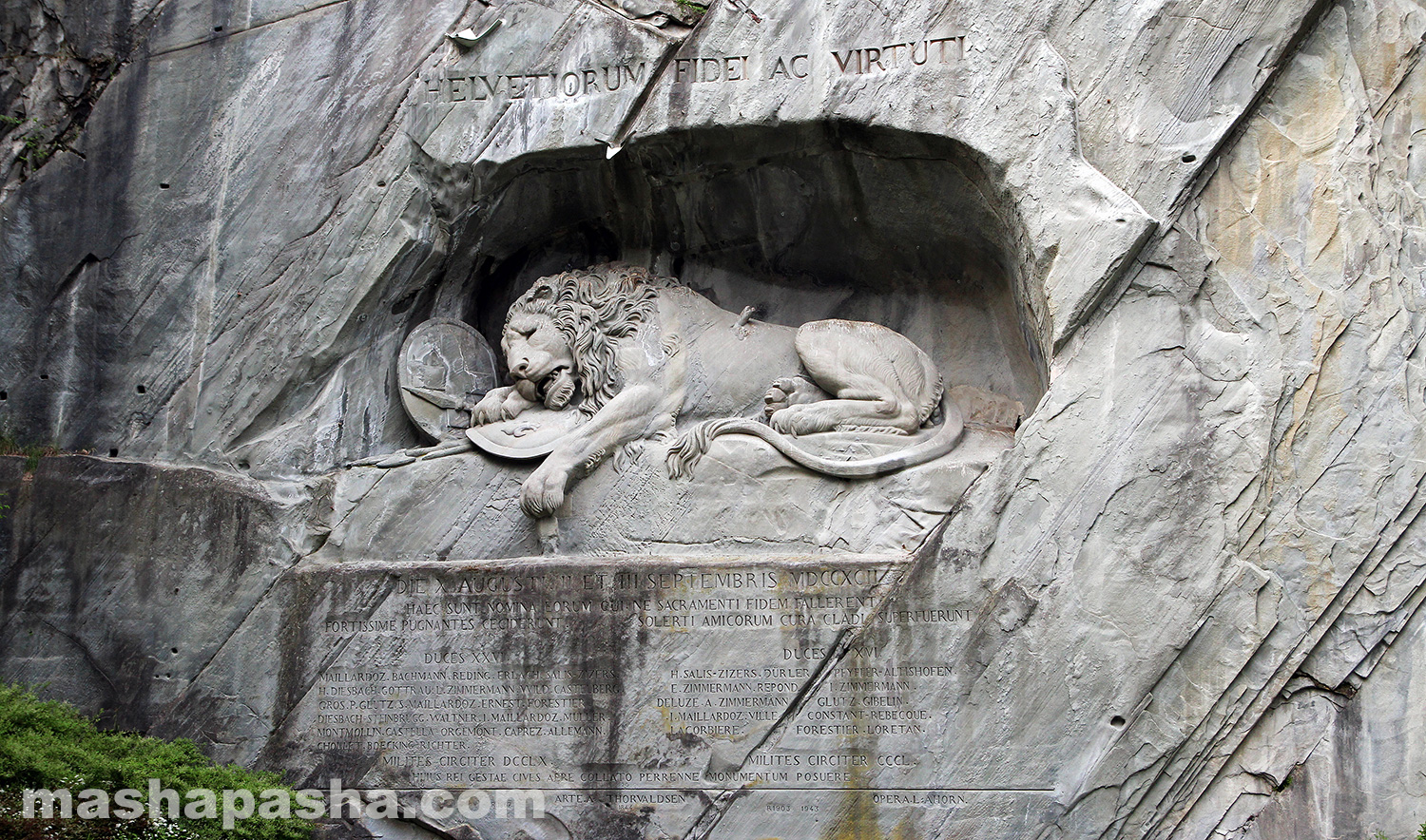
The Dying Lion (Löwendenkmal) in Lucerne is a famous sculpture by Danish master Bertel Thorvaldsen, dedicated to the Swiss Guards who died defending King Louis XVI’s Tuileries Palace during the French Revolution in 1792.
Historical Background
When Parisian rebels stormed the Tuileries Palace, over a thousand Swiss Guards remained loyal to the king. Most were killed because the king had forbidden firing at the crowd. Lieutenant Karl Pfüffer, one of the few survivors, later decided to erect a monument in Lucerne to honor his fallen colleagues. Funding came from around the world, including the Romanov family.
- Thorvaldsen made the initial sketches in 1818 while working in Rome.
- The sculpture was completed in 1821 by Swiss sculptor Lucas Ahorn using Thorvaldsen’s designs.
Location & Access
- Originally outside the old city in a quarry, the monument is now in central Lucerne.
- 地址: Denkmalstrasse 4.
- A 15–20 minute walk from the Kapellbrücke (Wooden Chapel Bridge) leads you to the site.
- The sculpture is surrounded by a small park with a pond in front.
- 入口: Free, open 24 hours.
Description of the Sculpture
- A nine-meter-long lion carved into a steep rock, resting in a deep niche.
- Its shoulder is pierced by a spear, and its head rests on a shield bearing the lily, symbol of French royalty.
- Nearby is a shield with the coat of arms of the Swiss Confederation.
- Above the niche: “HELVETIORUM FIDEI AC VIRTUTI” (“dedicated to the loyalty and courage of the Swiss”).
Visitor Tips
- The monument is very popular, with many tourists visiting throughout the day.
- For fewer crowds, visit early morning or late evening.
Legacy
- Mark Twain described it as “the saddest and most touching stone statue in the world.”
- The Dying Lion became famous worldwide. Copies exist in Greece and the USA.


当地天气: Dying Lion, Lucerne
13°
多云,感觉 12°
- 今天 11°…25°
- 风 3 公里/小时 N
- 目前没有降水。
太阳
11°…25°
☔ 0%
星期一
13°…26°
☔ 0%
星期二
12°…25°
☔ 0%
按月平均
一月
-1°…4°
15天
16天
二月
0°…7°
16天
13天
三月
1°…10°
16天
14天
四月
4°…14°
16天
14天
可能
8°…17°
13天
18天
俊
13°…22°
13天
17天
七月
16°…24°
14天
17天
八月
16°…24°
16天
15天
九月
12°…19°
16天
14天
十月
8°…15°
18天
13天
十一月
3°…9°
16天
14天
12月
0°…6°
17天
14天
ERA5 过去 10 年的月平均值和无降雨日数(无可测量的降雨)。.