15/07/2026
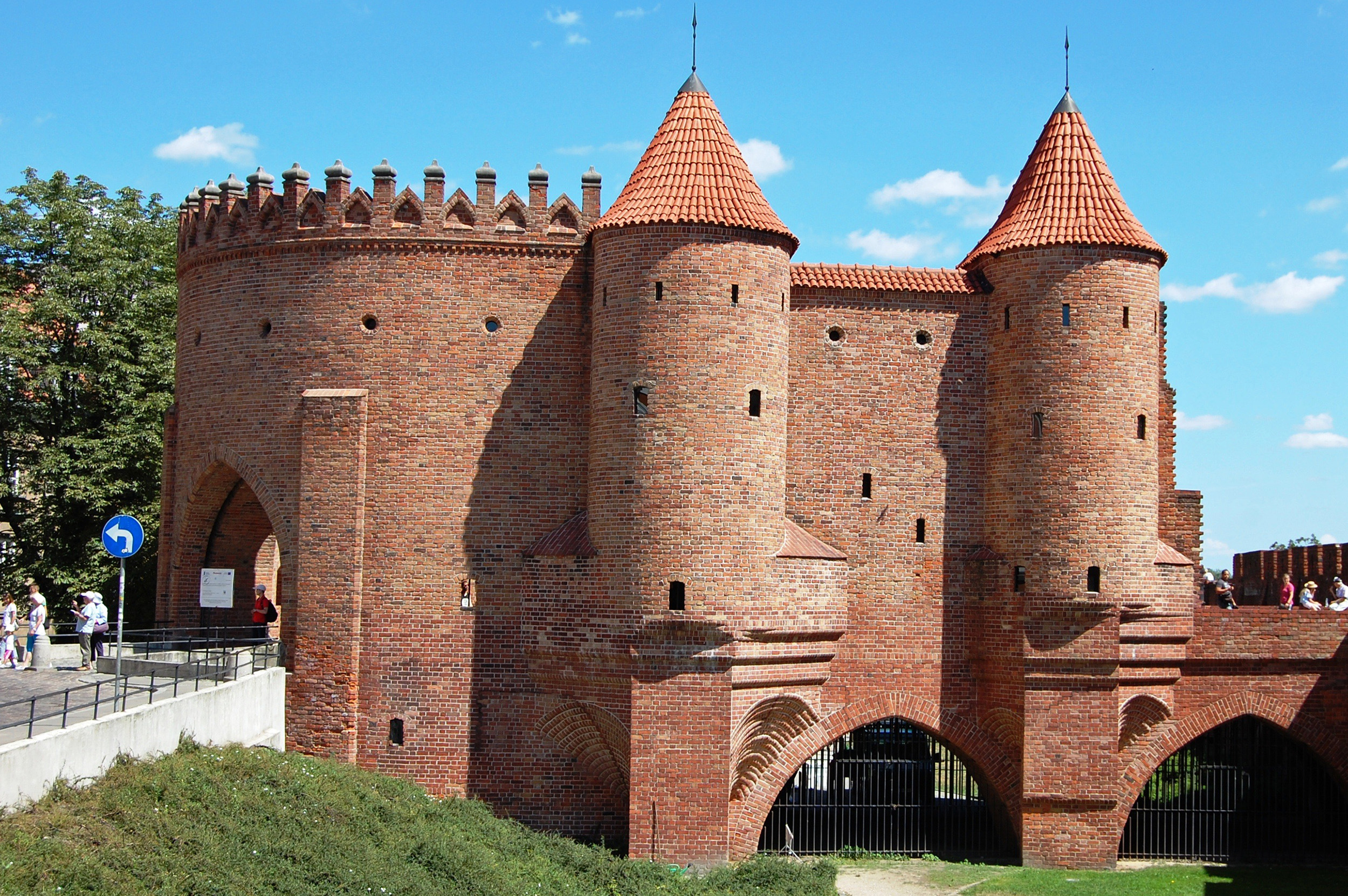
The Warsaw Barbican (Barbakan Warszawski) is a fortified outpost that once guarded the northern entrance to the walled Old Town. Built around 1540 by the Venetian-born architect Giovanni Battista, it formed part of the complex of defensive walls that encircled medieval Warsaw. The Barbican quickly became militarily obsolete as artillery advanced, and over the centuries much of it was dismantled. Like most of the Old Town, it was largely destroyed during the Second World War and reconstructed in the 1950s, using in part original bricks recovered from demolished buildings.
What It Is Famous
The Barbican is famous for its distinctive semicircular brick bastion topped with a decorative Renaissance parapet, flanked by turrets and set within the reconstructed city walls. It marks the boundary between the Old Town (Stare Miasto) and the New Town (Nowe Miasto) and is one of the most photographed spots in the city. Visitors can walk along sections of the adjoining defensive walls and pass beneath the gate on Nowomiejska Street. In warmer months the area around the Barbican fills with street musicians, portrait artists and vendors selling paintings and souvenirs, giving it a bustling, festive character.
Practical Information
The Barbican stands on Nowomiejska Street, a short walk north of the Old Town Market Square. It is an open-air monument, freely accessible at all hours with no admission charge. The closest transport connections are the “Stare Miasto” bus stop (lines 116, 178, 180 and 503) and, a little further out, the Ratusz Arsenał metro station on line M1. Because it sits directly on the walking route between the Old and New Towns, most visitors reach it naturally while exploring the historic centre on foot.


Weather in location: Warsaw Barbican (Barbakan Warszawski), Poland
- Today 7°…12°
- Wind 6 km/h NE
- No precipitation now
Average by month
Monthly averages and dry days (no measurable rain) from ERA5, last 10 years.