






15/07/2016
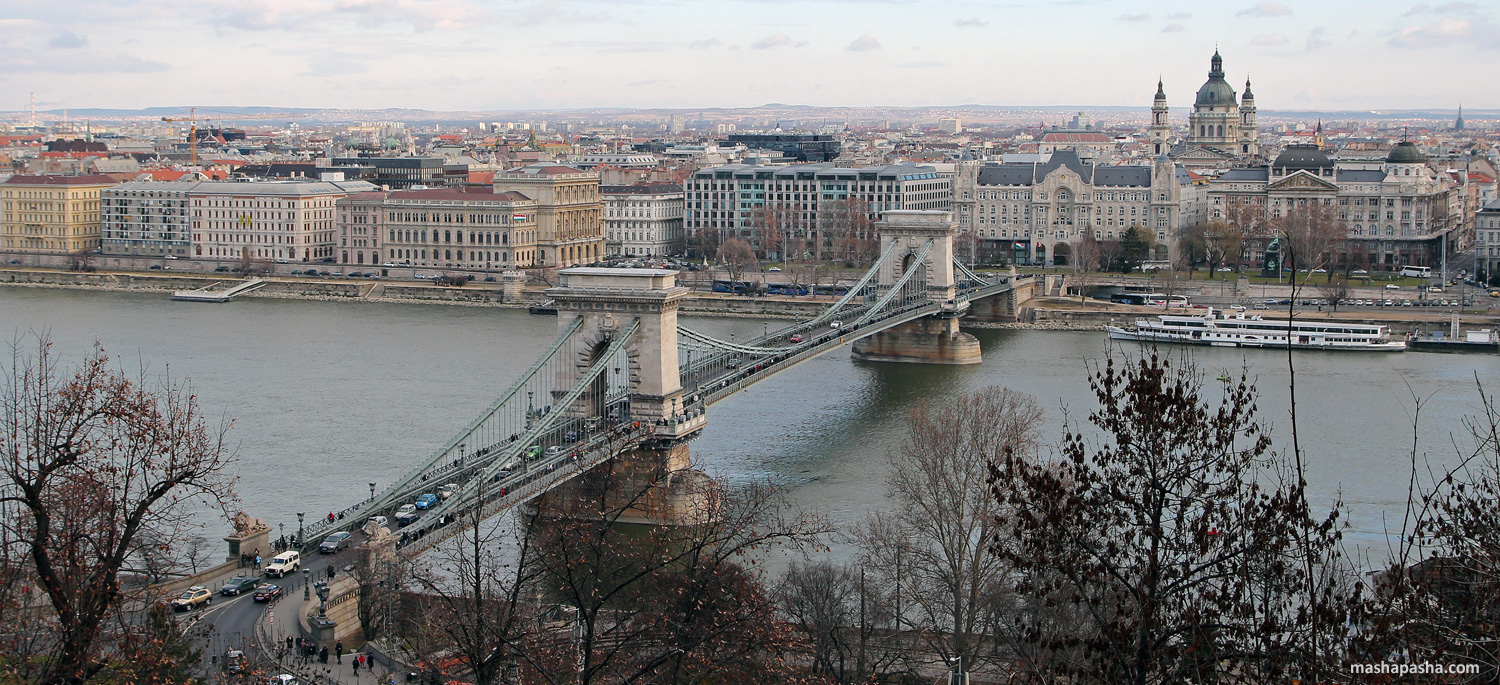
The Széchenyi Chain Bridge (Széchenyi Lánchíd) is the oldest permanent bridge across the Danube in Hungary. Opened in 1849, it was regarded as one of the largest bridges in the world at the time, with a central span of more than 200 meters. The bridge played a key role in linking the settlements of Buda and Pest, which were later united into Budapest.
The project was initiated and financed by Count István Széchenyi, after whom the bridge was named. The design was based on a smaller suspension bridge over the River Thames in Marlow, United Kingdom. Both bridges were designed by the English engineer William Tierney Clark, while the construction in Hungary was overseen by Adam Clark (unrelated). Many British specialists participated in the project, as the Habsburg Monarchy lacked local expertise for such an undertaking.
The bridge is a suspension structure supported by cast iron chains manufactured in England. On the Pest side, it begins at Széchenyi István Square near Gresham Palace. On the Buda side, it connects to the area of the Buda Castle Hill funicular, leading up to the Royal Palace. The Chain Bridge quickly became a symbol of Budapest’s development and unity.
During World War II, retreating German troops destroyed the bridge in 1945, leaving only the stone piers standing. It was reconstructed after the war and reopened in 1949, exactly 100 years after its original inauguration. A toll was initially required for crossing, but the bridge has since been free to use. It offers views of the Danube, the Hungarian Parliament Building, and Buda Castle.
附加信息
The Chain Bridge has undergone several renovations to preserve its structural integrity and accommodate modern traffic. Beyond its practical role as a transport link, it functions as a cultural symbol frequently featured in national events, commemorations, and visual representations of Budapest.


当地天气: Széchenyi Chain Bridge, Budapest
- 今天 12°…23°
- 风 2 公里/小时 NE
- 目前没有降水。