16/01/2026
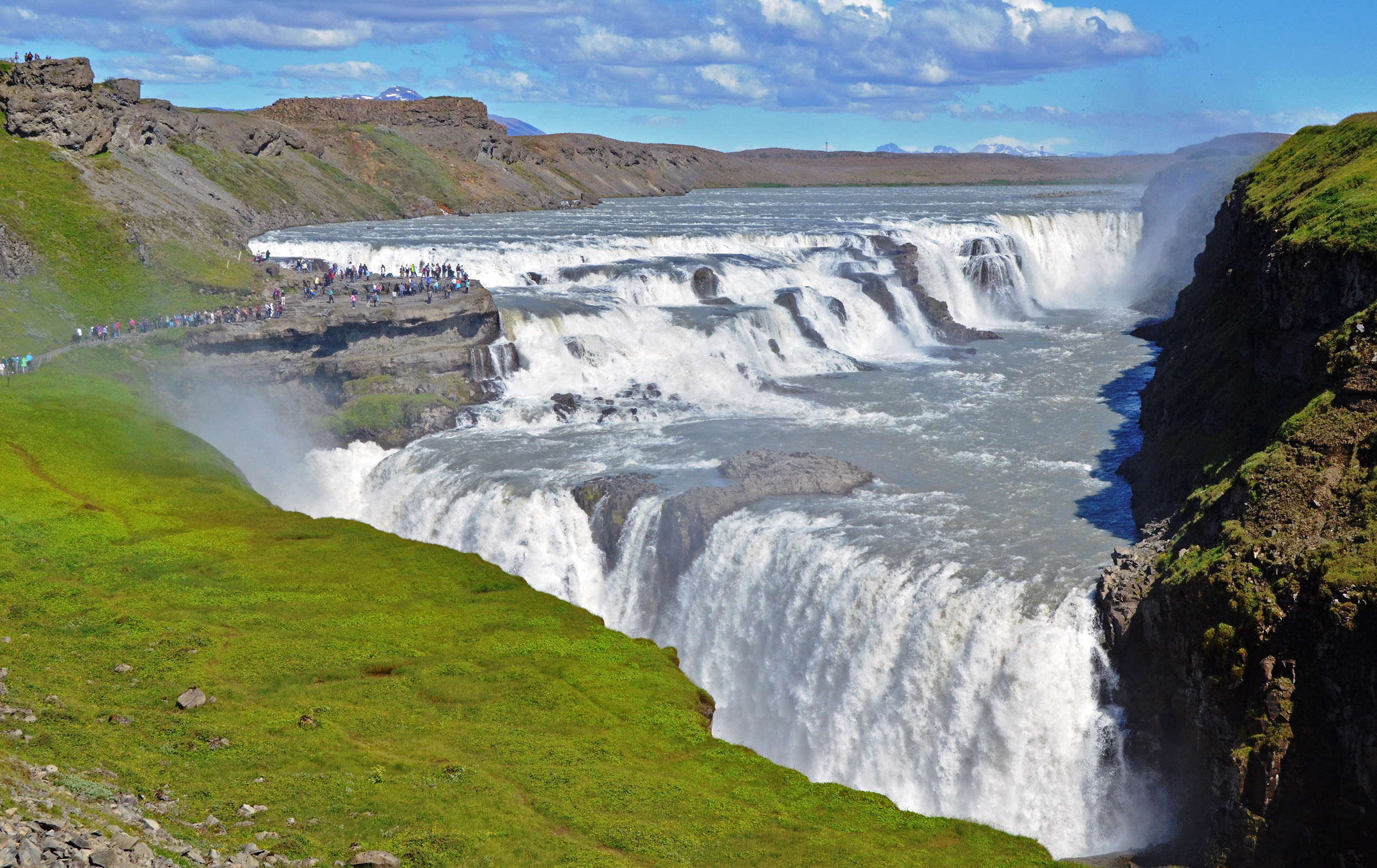
Gullfoss, meaning “Golden Falls,” is one of the most famous and powerful waterfalls in Iceland. It is located in southwestern Iceland, in the canyon of the Hvítá River, and is part of the well-known Golden Circle tourist route. Gullfoss is one of the most visited natural attractions in the country and is known for its dramatic size, strong water flow, and easy access for visitors.
Location and Surroundings
Gullfoss is situated about 120 kilometers (75 miles) east of Reykjavík, Iceland’s capital. The waterfall lies in a wide, rugged landscape shaped by glaciers and volcanic activity. The Hvítá River originates from the Langjökull glacier, Iceland’s second-largest glacier, and carries large volumes of meltwater toward the south. The waterfall drops into a deep, narrow canyon with steep rock walls, creating a dramatic and powerful scene, especially when viewed from above.
Height and Structure
Gullfoss is a two-step waterfall rather than a single vertical drop.
- The upper drop is about 11 meters (36 feet)
- The lower drop is about 21 meters (69 feet)
The total height of the waterfall is approximately 32 meters (105 feet). While it is not among the tallest waterfalls in the world, Gullfoss is famous for its massive water volume. During summer, the water flow can reach up to 140 cubic meters per second, making it one of the most powerful waterfalls in Europe.
Appearance and Natural Features
Gullfoss is known for its wide shape and strong currents. On sunny days, the mist rising from the waterfall often creates bright rainbows over the canyon. In winter, parts of the waterfall freeze, forming ice sculptures along the cliffs while the water continues to flow beneath the ice.
The name “Golden Falls” is often explained by the golden color the water can appear to have in sunlight, especially during late afternoon.
How to Get There
Gullfoss is very easy to reach and is suitable for all types of travelers:
- From Reykjavík, visitors can drive along Route 1, then continue on Route 35, which leads directly to the waterfall.
- The drive takes about 1.5 to 2 hours by car.
- Gullfoss is commonly visited together with Þingvellir National Park and Geysir geothermal area as part of a Golden Circle day trip.
There is a large parking area close to the waterfall.
Visiting the Waterfall
Several marked walking paths and viewing platforms allow visitors to see Gullfoss from different angles, including viewpoints close to the water and higher panoramic platforms. The paths are well maintained, but can be slippery due to mist, especially in colder weather.
A visitor center nearby offers basic facilities such as restrooms and a café.
Best Time to Visit
Gullfoss can be visited year-round.
- Summer (June–August) offers the strongest water flow and easier walking conditions.
- Winter (November–March) provides a quieter experience with snow and ice, but paths may be icy and weather conditions can be harsh.


Weather in location: Gullfoss waterfall, Iceland
- Today 5°…9°
- Wind 52 km/h S
- Precipitation 0.9 mm
Average by month
Monthly averages and dry days (no measurable rain) from ERA5, last 10 years.