







Bulgaria
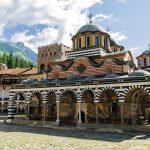
Top sights and places to visit in Bulgaria offer a diverse mix of ancient history, cultural landmarks, and natural beauty. The capital city Sofia is a major cultural hub, featuring historic churches, museums, and urban life. One of the country’s most important landmarks is the Rila Monastery, a UNESCO World Heritage site. Another must-see destination is Plovdiv, one of the oldest cities in Europe. For seaside tourism, the Black Sea Coast offers sandy beaches, resorts, and historic coastal towns.
General information
Bulgaria sits in south-eastern Europe on the Balkan Peninsula, with the Black Sea forming its eastern coast and the Rila, Pirin and Balkan mountain ranges rising inland. It is a country of deep history — home to Thracian tombs, Roman ruins, medieval monasteries and Ottoman-era towns — and the birthplace of the Cyrillic script. The capital is Sofia, the language is Bulgarian, and Bulgaria is a member of the European Union. The coast is at its best from May to September, while the mountain resorts come alive in winter.
Transport and how to get there
The main international gateway is Sofia Airport (SOF), which handles the widest range of year-round flights. In summer the coastal airports of Burgas (BOJ) and Varna (VAR) add many seasonal routes for beach holidays. Getting around is easiest by intercity bus, with a dense and inexpensive network; trains are cheaper still but slower. Renting a car gives the most freedom for reaching monasteries, mountains and smaller towns.
Prices
Since 2026 Bulgaria uses the euro (EUR), and it remains one of the more affordable destinations in the EU. A guesthouse or budget hotel runs roughly €30–60 a night, mid-range hotels about €60–110. A meal at an inexpensive restaurant is around €8–14, a three-course dinner for two in a mid-range place about €30–45, and a coffee near €2. A single city transport ticket in Sofia costs about €1, and most museum tickets fall between €3 and €8. Prices are approximate and vary with season and location.
Main attractions
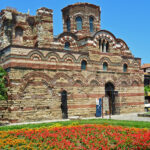
Highlights include Sofia with its gold-domed Alexander Nevsky Cathedral, the UNESCO-listed Rila Monastery deep in the mountains, and Plovdiv — one of Europe's oldest continuously inhabited cities — with its Roman theatre and colourful Old Town. On the coast, the ancient town of Nessebar (UNESCO) and lively resorts such as Sunny Beach draw summer crowds. Inland, Veliko Tarnovo and its Tsarevets fortress recall the medieval capital, while Bansko and Borovets are the leading ski centres and the Belogradchik Rocks offer dramatic natural scenery.