06/11/2025
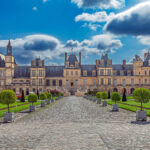
The Palace of Versailles is a former royal residence located in the city of Versailles, approximately 20 kilometers southwest of Paris, France. Known for its grand architecture, extensive gardens, and historical significance, the palace is one of the most famous cultural landmarks in the world. It served as the political center of the French monarchy during the reigns of Louis XIV, Louis XV, and Louis XVI. Today, the Palace of Versailles is a museum and UNESCO World Heritage Site visited by millions of tourists each year.
History
Originally built as a hunting lodge for King Louis XIII in 1623, the site was transformed by his son, King Louis XIV, into a magnificent palace. Construction began in 1661 under the architect Louis Le Vau and was later continued by Jules Hardouin-Mansart, with interiors by the painter Charles Le Brun. Versailles became the official seat of the court and government in 1682, symbolizing the absolute power of the French monarchy. The royal family was forced to leave for Paris in October 1789, and in 1837 King Louis-Philippe turned the palace into a museum of French history.
Architecture and Interior
The Palace of Versailles is known for its highly decorative classical architecture, featuring symmetry, richly detailed stonework, and massive interior spaces.
Key highlights include:
- Hall of Mirrors: One of the most famous rooms in the world, 73 meters long and lined with 357 mirrors facing the windows onto the gardens. The Treaty of Versailles was signed here in 1919.
- Royal Apartments: Luxurious chambers used by the king, queen, and members of the royal court, featuring elaborate ceiling paintings and gold decoration.
- Opera House: The Royal Opera, inaugurated in 1770 for the wedding of the future Louis XVI and Marie Antoinette.
- Chapel of Versailles: The two-storey Royal Chapel, completed in 1710, where the king attended mass from the upper gallery.
Gardens and Grounds
The gardens of Versailles were designed by landscape architect André Le Nôtre and are considered masterpieces of French formal garden style, with terraces, fountains and the 1.7-kilometer Grand Canal. Visitors can explore them on foot, by bicycle, by rowing boat on the canal or on the small tourist train. The park also holds the Trianon estate, with the Grand Trianon, the Petit Trianon and Marie Antoinette’s Hamlet.
Visiting the Palace
The palace is open Tuesday to Sunday from 9:00 to 18:30 (to 17:30 from November to March) and is closed on Mondays, 1 January, 1 May and 25 December; the Trianon estate opens at noon. The gardens are open every day and are free, except on the days of the Musical Fountains Show and the Musical Gardens.
Since 2026 a single Passport ticket covers the palace, the Trianon estate and the gardens. It costs €32 in the high season (April to October) and €22 in the low season for residents of the European Economic Area, and €35 and €25 for other visitors. Entry is free for under-18s and for EU residents under 26, but everyone must book a time slot for the palace.
Due to its popularity, visitors are encouraged to arrive early, especially during peak travel seasons in spring and summer.
How to Get There
By train:
The easiest way to reach Versailles from Paris is by regional train. The RER Line C runs from central Paris to the Versailles Château–Rive Gauche station in about 40 minutes, a 10-minute walk from the palace. Trains from Saint-Lazare to Versailles Rive Droite and from Montparnasse to Versailles Chantiers are good alternatives.
By car:
Versailles is about 20 kilometers from central Paris via the A13. Paid parking is available on the Place d’Armes in front of the palace, but it fills up quickly in summer.


Weather in location: Palace of Versailles, France
- Today 5°…13°
- Wind 9 km/h N
- No precipitation now
Average by month
Monthly averages and dry days (no measurable rain) from ERA5, last 10 years.