







Serbia
Travel destinations and tourist attractions in Serbia combine lively cities, fortresses, and river landscapes. The capital Belgrade is known for its riverside Kalemegdan Fortress and vibrant nightlife, while the wider country offers historic monasteries, spa towns, national parks, and the confluence of the Danube and Sava rivers.
General information
Serbia is a landlocked country in the heart of the Balkans, crossed by the Danube and Sava rivers. The capital is Belgrade, the language is Serbian (written in both Cyrillic and Latin scripts), and while Serbia is a candidate for European Union membership it is not yet a member and uses its own currency, the Serbian dinar (RSD). The country is known for its riverside fortresses, lively nightlife, medieval monasteries and warm hospitality. It can be visited year-round, with summer busiest for festivals.
Transport and how to get there
The main gateway is Belgrade Nikola Tesla Airport (BEG), with a smaller airport at Niš (INI). Belgrade is a regional bus hub with good connections across the Balkans, and trains — including a fast line to Novi Sad — are improving. A rental car helps for reaching monasteries and the Danube gorges, while central Belgrade and Novi Sad are easily explored on foot.
Prices
The currency is the Serbian dinar (RSD; roughly 100 RSD to about €0.85) and Serbia is cheaper than most of the EU. A budget hotel or hostel costs roughly RSD 3000–6000 a night, mid-range hotels about RSD 6000–11000. An inexpensive meal is around RSD 700–1200, a three-course dinner for two in a mid-range restaurant about RSD 3000–4500, and a coffee near RSD 250. A city transport ticket in Belgrade is about RSD 50–100, and most museums RSD 300–600. Prices are approximate.
Main attractions
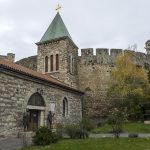
Belgrade centres on the mighty Kalemegdan Fortress above the meeting of the Danube and Sava, the bohemian Skadarlija quarter and the vast Church of Saint Sava. Novi Sad guards the Petrovaradin Fortress, home of the EXIT festival from 2000 to 2025, while downstream the Danube carves the spectacular Đerdap (Iron Gates) gorge. Inland lie the UNESCO monasteries of Studenica and Sopoćani, the traditional village of Drvengrad and the scenic Šargan Eight mountain railway.