







Slovakia
The most popular tourist attractions in Slovakia combine mountain scenery, castles, and historic towns. The capital Bratislava sits on the Danube beneath its hilltop castle, while the High Tatras offer alpine hiking and skiing, and the country is dotted with medieval castles, caves, and charming old towns such as Kosice.
General information
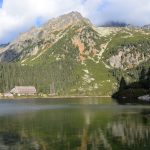
Slovakia is a landlocked country in the heart of Central Europe, bordering Austria, Czechia, Poland, Ukraine and Hungary. The capital is Bratislava, the language is Slovak, and the country belongs to both the European Union and the eurozone. Its landscape is dominated by the Carpathians, and above all the dramatic High Tatras, alongside a remarkable density of castles, thermal spas and caves. Summer is ideal for hiking, while winter brings skiing to the mountain resorts.
Transport and how to get there
Bratislava Airport (BTS) is the national gateway, though its route network is limited. Because Vienna International Airport (VIE) lies only about 50 km away and is far better connected, many visitors fly there and take a direct bus or train to Bratislava in around an hour. Košice Airport (KSC) serves the east of the country. Trains and buses cover Slovakia well and inexpensively, and Bratislava's position close to both Vienna and Budapest makes multi-country trips easy.
Prices
The currency is the euro (EUR), and Slovakia is noticeably cheaper than Western Europe. A guesthouse or budget hotel costs roughly €40–70 a night, mid-range hotels about €70–120. An inexpensive meal is around €8–13, a three-course dinner for two in a mid-range restaurant about €30–45, and a coffee near €2.50. A single public transport ticket in Bratislava is around €1. The grounds of Bratislava Castle are free to enter, its museum costs about €10, and Spiš Castle around €8. All prices are approximate and change with the season.
Main attractions
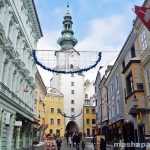
Bratislava charms with its compact Old Town, hilltop castle, St. Martin's Cathedral and the nearby ruins of Devín. The High Tatras offer superb hiking and skiing around Štrbské Pleso, while Spiš Castle — one of the largest castle complexes in Central Europe — and the mining town of Banská Štiavnica are both UNESCO sites. Add the gorges and caves of Slovak Paradise, the eastern city of Košice with its Gothic cathedral, the fairy-tale Bojnice and Orava castles, and the wooden churches of the Carpathians, and the country rewards far more than a short stop.