24/08/2026
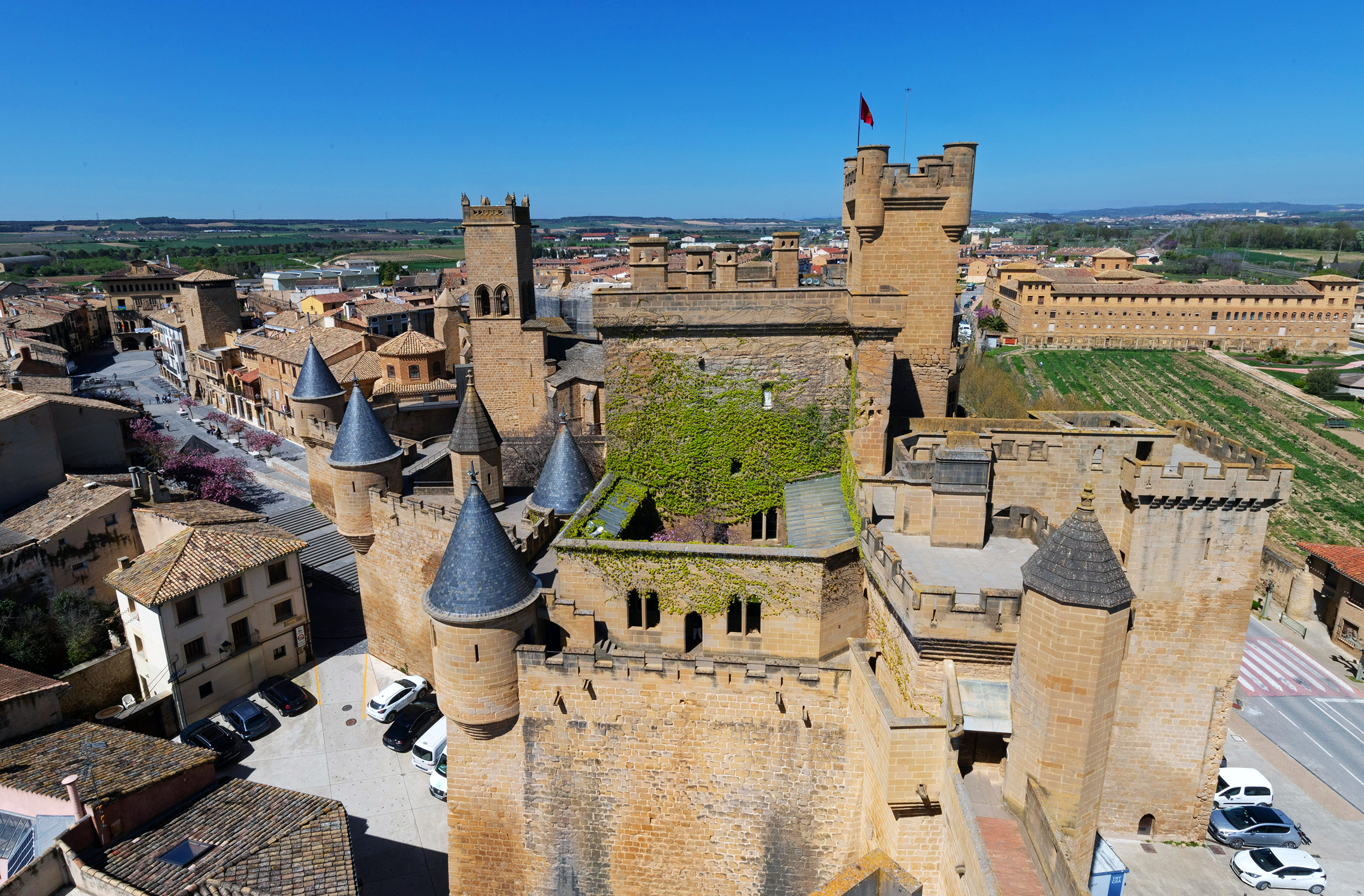
The Royal Palace of Olite (Palacio Real de Olite) is the most spectacular castle in Navarre and one of the great Gothic palaces of Spain — a fairy-tale silhouette of turrets, battlements and towers rising over the walled town of Olite, south of Pamplona. It was created around 1400 by King Charles III “the Noble” of Navarre, who turned an older fortress into a lavish royal residence, bringing craftsmen from France and Castile to build a court of towers, halls, hanging gardens and courtyards decorated with all the luxury of the age — complete, it is said, with a menagerie of exotic animals. Much of it was lost when the palace was deliberately burned in 1813 to keep it from Napoleon’s troops, but a careful restoration in the 20th century has brought its romantic profile back to life.
What to See
Exploring the palace is a delight of spiral staircases, ramparts and towers linked by walkways, each opening new views over the terracotta rooftops of Olite and the vineyards of the surrounding Navarran wine country. Highlights include the tall Tower of the Three Crowns and the watchtower, the atmospheric Gothic halls and galleries, and the restored hanging garden high on the walls. The palace adjoins the fine Gothic church of Santa María la Real, with its richly carved portal, while part of the older palace now houses a Parador hotel, so you can even sleep within its medieval walls. Down in the town, medieval underground galleries and the wine culture of the Navarra Denominación de Origen add to the appeal.
How to Get There and Practical Information
Olite lies about 40 kilometres south of Pamplona in the wine-growing south of Navarre, and is easily reached by car along the A-15 motorway; there are also regional trains and buses from Pamplona to Olite (Erriberri). The town itself is small and walkable, with the palace at its heart and parking nearby. Entry to the restored New Palace is ticketed and inexpensive, with reduced rates for children and seniors and audio guides available; it is open year-round with seasonal hours. Olite is the most visited monument in Navarre, so it can be busy in summer and during festivals — but it remains an atmospheric place, and combines well with the nearby medieval town of Ujué and the wineries of the region.


Weather in location: Olite Castle, Spain
- Today 10°…17°
- Wind 26 km/h N
- No precipitation now
Average by month
Monthly averages and dry days (no measurable rain) from ERA5, last 10 years.