06/03/2026
Semana Santa (Holy Week) is one of the most powerful and emotional cultural traditions in Spain. For centuries, this celebration has combined religious devotion, artistic expression, and community participation, turning entire cities into open-air stages filled with processions, music, and centuries-old rituals. Today, Semana Santa attracts millions of visitors from around the world.
The exact dates change every year because they are based on the lunar calendar and the timing of Easter.
- 2027: March 21 – March 28
- 2028: April 9 – April 16
The most important days during the week include Palm Sunday, Holy Thursday, Good Friday, and Easter Sunday, when the largest processions take place.
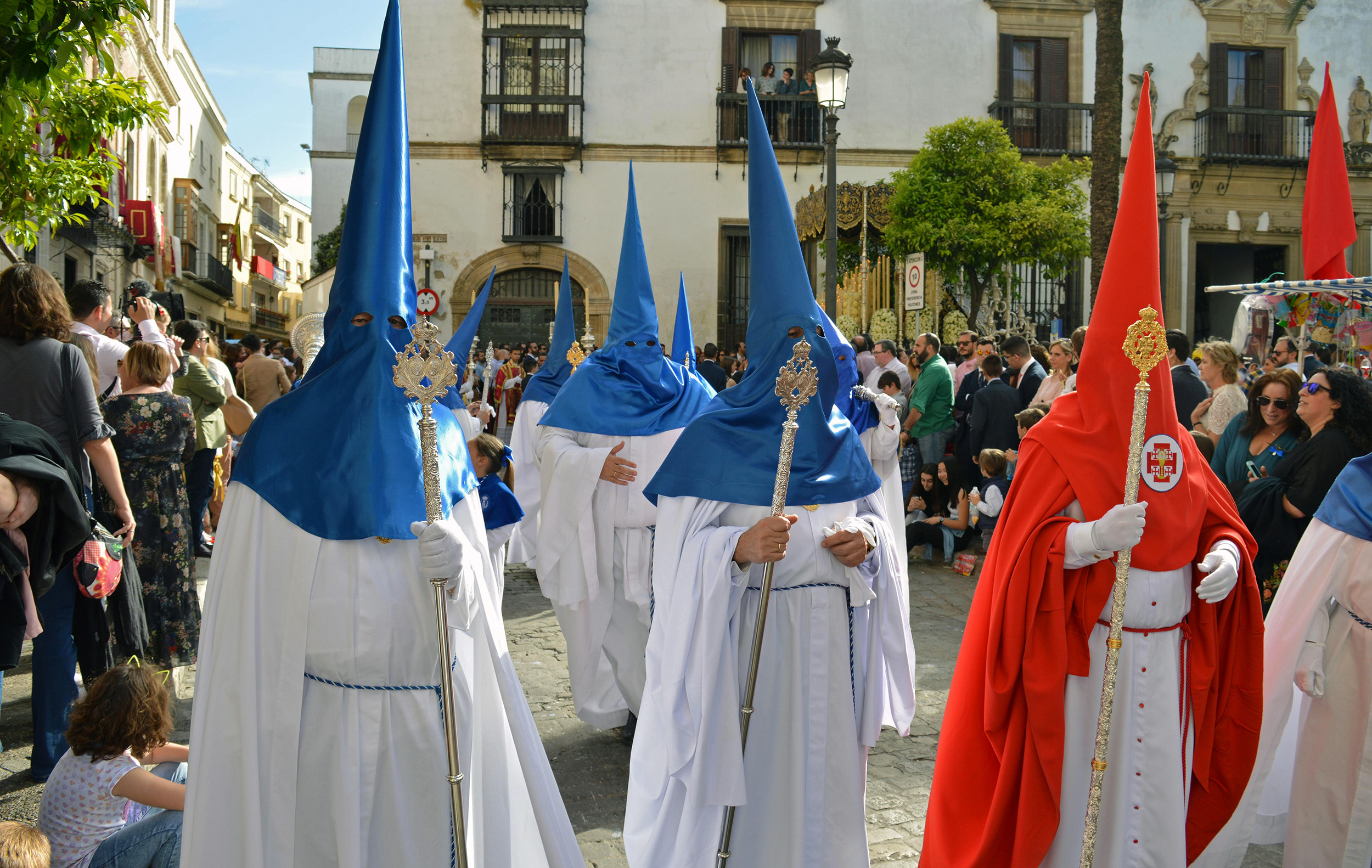
Throughout the week, religious brotherhoods known as cofradías organize solemn processions through city streets. Participants wear traditional robes and tall pointed hoods called capirotes, symbolizing anonymity and humility.
Large decorated floats, known as pasos, carry statues depicting scenes from the Passion of Christ or images of the Virgin Mary. These heavy structures are carried by groups of men called costaleros, who walk slowly through the streets accompanied by drums, brass bands, and traditional chants.
Semana Santa in Seville
Seville hosts the most famous Semana Santa celebrations in Spain and possibly the most impressive in the world. The tradition dates back to the 16th century. Around 70 brotherhoods walk in procession to the Cathedral along the official route through La Campana, Calle Sierpes and Avenida de la Constitución, with about 120 pasos and more than 60,000 nazarenos taking part.
One of the most unforgettable moments is La Madrugá, the night between Holy Thursday and Good Friday. During this time, the most revered images—such as the Virgin of the Macarena—are carried through the city while thousands of people watch in silence.
What makes Seville special for tourists:
- About 70 processions with some 120 pasos during the week
- Historic city streets filled with candles and incense
- Traditional flamenco-style religious songs called saetas
- An atmosphere of intense devotion and emotion
Semana Santa in Málaga
Málaga offers a very different interpretation of Semana Santa. While Seville is solemn and dramatic, Málaga’s celebrations are more festive and spectacular. Massive floats known as tronos can weigh several tons and are carried by hundreds of people through the streets.
Music plays a major role here. Military bands often accompany the processions, creating a powerful and energetic atmosphere. One of the most famous traditions is the release of a prisoner, a custom dating back to the 18th century when a king granted the city this symbolic act of mercy.
Semana Santa in Zaragoza
Semana Santa in Zaragoza is famous for its powerful drum processions. Thousands of participants dressed in traditional robes march through the streets playing large drums and bass drums, creating a dramatic and unforgettable soundscape.
Unlike the more theatrical processions in southern Spain, Zaragoza’s celebration focuses strongly on music and rhythm. The beating drums symbolize mourning and reflection during the Passion of Christ.


Weather in location: Semana Santa – Seville and everywhere in Spain
- Today 17°…23°
- Wind 5 km/h E
- No precipitation now
Average by month
Monthly averages and dry days (no measurable rain) from ERA5, last 10 years.