05/06/2018
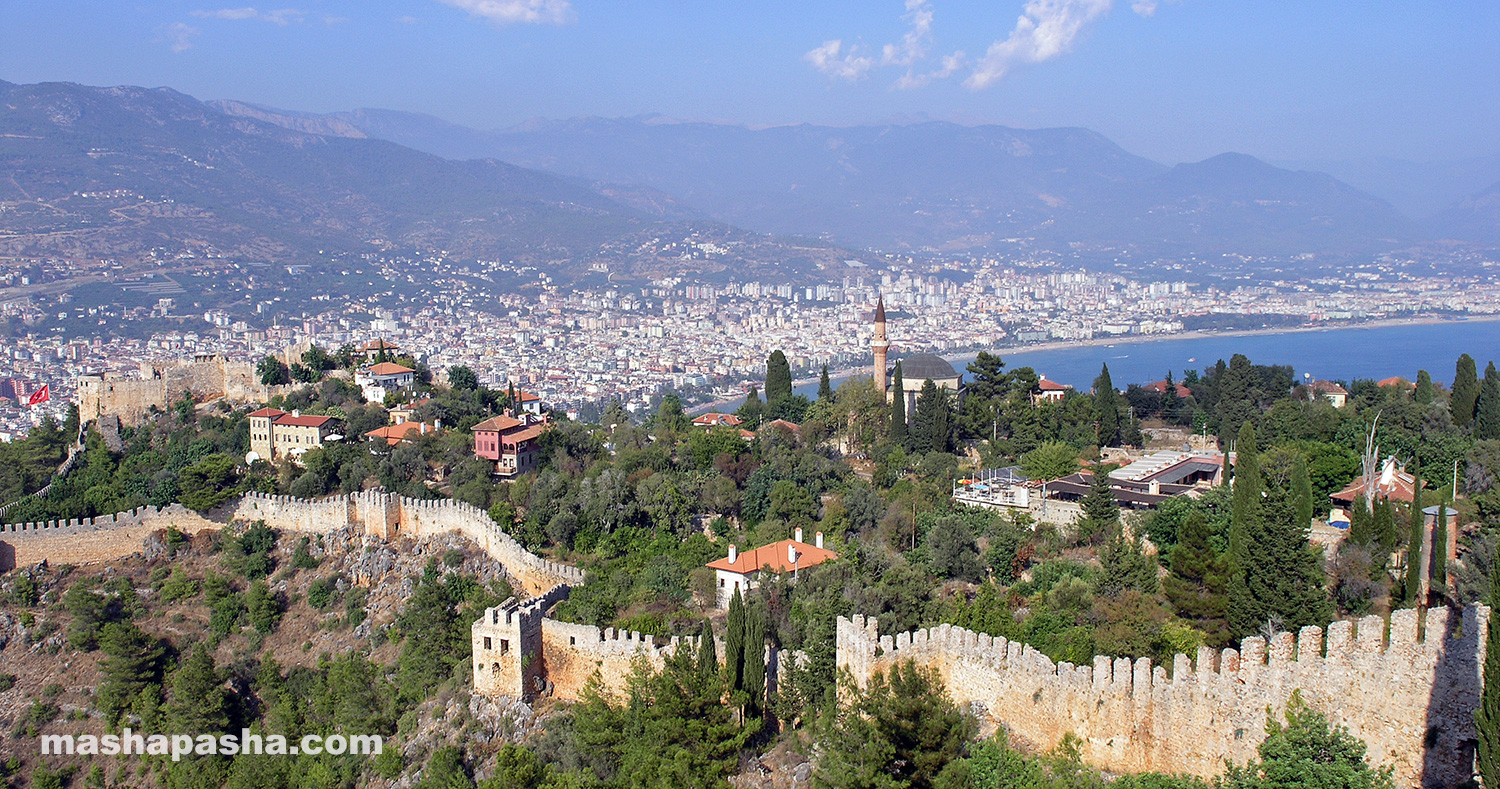
Alanya Fortress (Alanya Kalesi) is located in the center of the Turkish town of Alanya, on a mountain rising about 250 meters above sea level. The mountain divides the city into two parts, and the fortress on its summit is one of the most visible landmarks.
Access to the fortress is possible from the port of Alanya. From Cleopatra Beach, visitors can reach it by cable car (opened in 2017). Because of the steep terrain, it is more practical to go up by taxi or by city bus No. 4, which goes directly to the top. The ride usually takes 10–15 minutes. Walking is also possible, but the climb takes 40–60 minutes and requires good physical condition.
The existing fortress was largely constructed in the 13th century under Sultan Alaeddin Keykubad I, after whom the city of Alanya was named. It was built on the foundations of earlier Roman and Byzantine fortifications. The site was strategically chosen: the steep slopes and the sea on three sides created natural defenses, while the elevated position offered extensive visibility over the surrounding area.
The defensive walls extend for approximately 6.5 km. In some sections, the walls follow the mountain ridge, while in others they descend almost to sea level, where the Red Tower is located. The fortifications include 83 towers, about 140 bastions and a castle at the highest point of the mountain. Access to the outer walls is free, but entry to the inner castle requires a ticket.
The castle itself is partly in ruins. Historically, it contained several gates, cisterns for storing water, a mint, a mosque, a monastery, the Sultan’s winter palace, a bathhouse, and various service buildings. One of the oldest surviving structures is the Byzantine Church of St. George, dating from the 4th–5th centuries. From the castle area, the sea, Cleopatra Beach, and the town of Alanya are visible.
Later additions include residential houses and villas built in the 19th century on the mountain slopes. At the foot of the fortress, near Cleopatra Beach, lies another point of interest, the Damlataş Cave.
Key facts about Alanya Fortress:
- Built mainly in the 13th century on earlier Roman and Byzantine foundations
- Walls extend for 6.5 km with 83 towers and about 140 bastions
- Includes the Red Tower and the ruined inner castle
- Contains remains of religious, military, and residential structures
Today, the fortress is a cultural and historical site visited by tourists and researchers. It illustrates the layered history of the region, from antiquity through the Seljuk period. Preservation work continues, with some areas accessible to the public for study and tourism.


Weather in location: Alanya Fortress
- Today 17°…20°
- Wind 6 km/h SE
- Precipitation 0.1 mm
Average by month
Monthly averages and dry days (no measurable rain) from ERA5, last 10 years.