02/08/2026
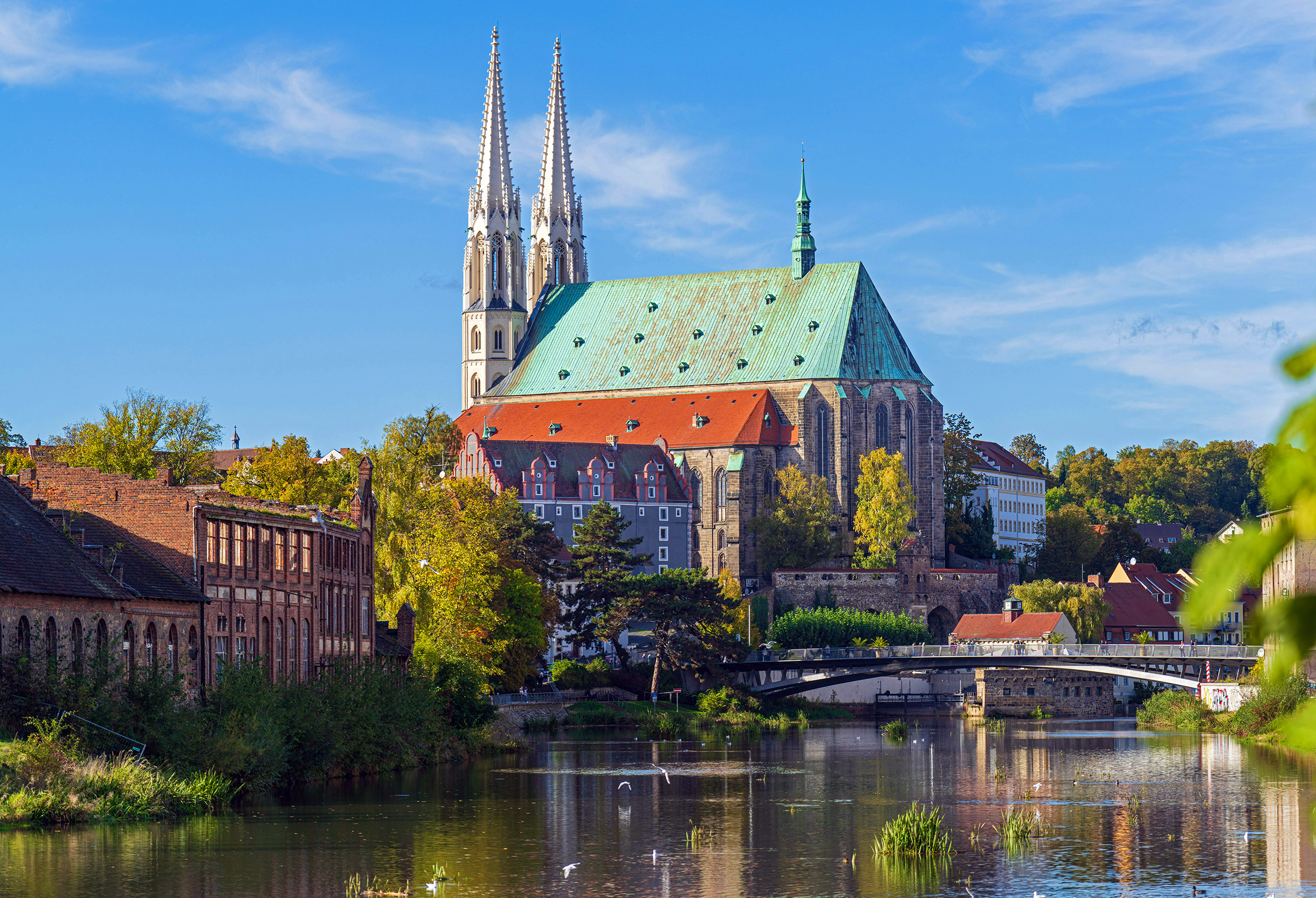
Görlitz is Germany’s easternmost town, spread along the west bank of the River Neisse, which since 1945 has formed the border with Poland — the streets on the far bank now make up the Polish town of Zgorzelec. What makes Görlitz extraordinary is its state of preservation: it came through the Second World War almost entirely unscathed, and its old town is a near-complete ensemble of more than 4,000 listed buildings spanning some five centuries, from Gothic and Renaissance through Baroque to the ornate Gründerzeit and Art Nouveau of the 19th century. Once the wealthy capital of Upper Lusatia, grown rich on cloth and trade, it has become one of the most beautiful and atmospheric historic towns in Germany — and, thanks to that architecture, a favourite film set nicknamed “Görliwood.”
What to See
The heart of the old town is formed by two adjoining market squares, the Untermarkt and Obermarkt, ringed by richly decorated merchant houses and dominated by the Town Hall with its famous outdoor staircase and painted figure of Justice. Nearby rises the great Gothic church of St Peter and Paul, whose Baroque “Sun Organ” is a highlight, while narrow lanes lead to Renaissance courtyards, ornate doorways and the tall hall-houses characteristic of the region. Görlitz also holds a remarkable Holy Sepulchre (Heiliges Grab), a late-medieval replica of the sacred sites of Jerusalem, and a sumptuous Art Nouveau department store whose galleried atrium starred in The Grand Budapest Hotel. The town’s cinematic good looks have drawn productions from Inglourious Basterds to The Reader and The Book Thief. For a view of it all, climb the Landeskrone, the volcanic hill on the edge of town, or one of the old towers, and stroll across the footbridge to look back at the skyline from the Polish side.
How to Get There and Practical Information
Görlitz sits in the far east of Saxony, about 100 kilometres east of Dresden and right on the Polish border. It has a handsome historic railway station with regional connections from Dresden (around 1½ hours) and Cottbus, as well as trains from Zgorzelec on the Polish side; from the station it is a short bus ride or walk to the old town. The historic centre is compact and entirely walkable, and a footbridge over the Neisse lets you cross freely into Poland and back. Wandering the streets and squares is free at any time, while individual sights such as the churches, the Holy Sepulchre and the town’s museums keep their own hours and charge modest admission. With relatively few crowds, good cafés and its unusual position on the very edge of the country, Görlitz rewards an unhurried visit of a day or more.


Weather in location: Görlitz old city, Saxony, Germany
- Today 3°…15°
- Wind 5 km/h S
- No precipitation now