03/11/2025
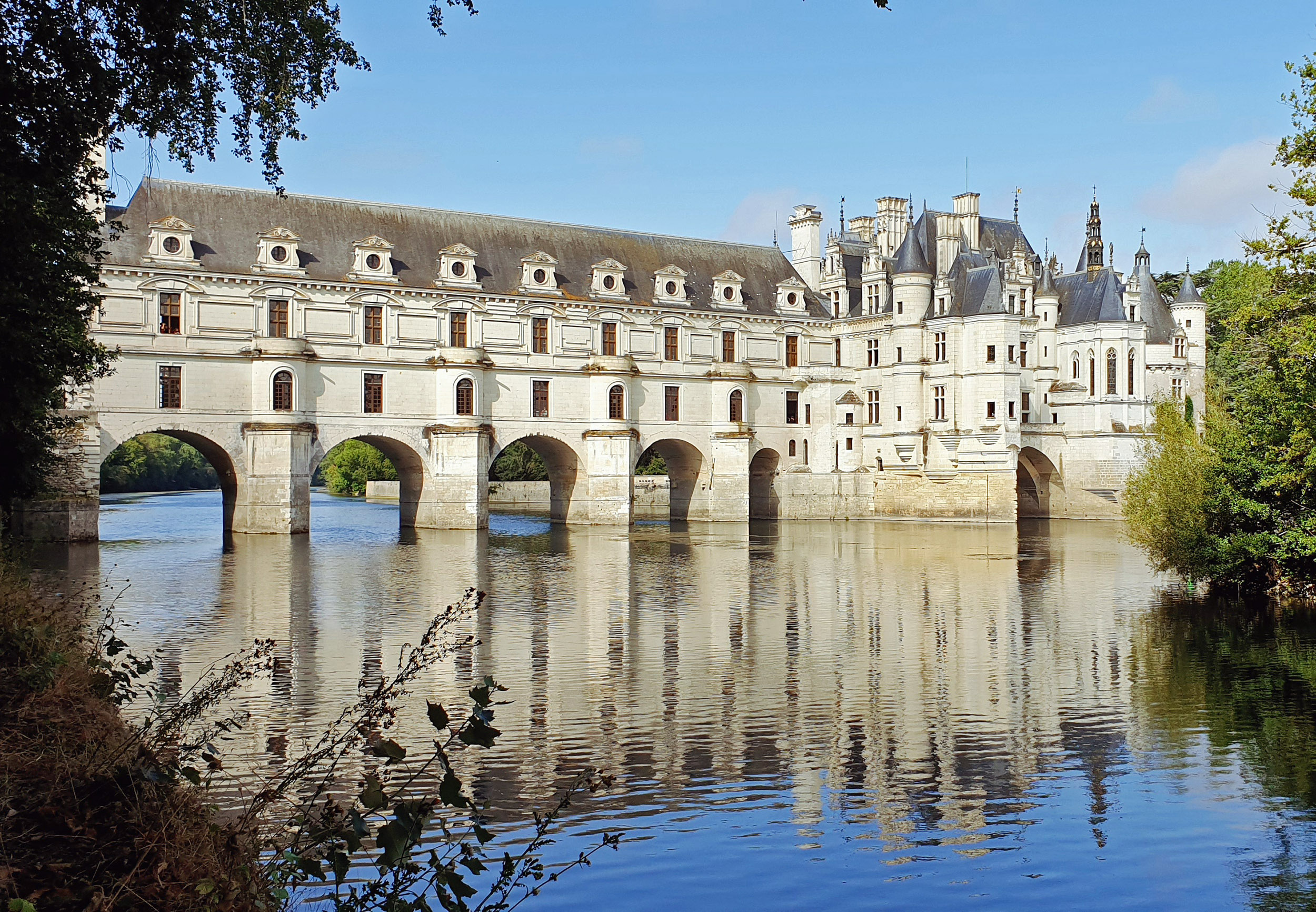
The Château de Chenonceau is one of the most elegant and renowned castles in France, located in the Loire Valley near the town of Chenonceaux, in the Indre-et-Loire department. Spanning the River Cher, the château is celebrated for its graceful Renaissance architecture, rich history, and beautiful gardens. Often called “The Ladies’ Castle” (Le Château des Dames), it owes much of its design and legacy to the influential women who owned, expanded, and decorated it over the centuries.
History and Significance
The present château was built between 1514 and 1522 on the foundations of an old mill by Thomas Bohier, a royal finance official, and his wife Katherine Briçonnet, who oversaw the works. In 1535 it passed to the French Crown, and King Henry II later gave it to his mistress, Diane de Poitiers.
Diane de Poitiers commissioned the arched bridge across the River Cher and laid out a large formal garden. After Henry II’s death in 1559, his widow, Catherine de’ Medici, forced Diane to give up the château, made it her own residence and added the two-storey gallery on top of the bridge.
Throughout history, Chenonceau has been home to several remarkable women, including Louise of Lorraine, Louise Dupin, and later Madame Pelouze, who helped preserve the château’s elegance and legacy. During the First World War the gallery served as a military hospital, and in the Second World War the River Cher marked the demarcation line, so the gallery led from occupied to free France.
Architecture
The Château de Chenonceau is a masterpiece of French Renaissance architecture, combining symmetry, elegance, and natural beauty. Its most iconic feature is the long gallery that stretches across the River Cher, supported by a series of graceful arches.
Key features include:
- The Gallery Hall, a long corridor with black-and-white tiled floors and large windows overlooking the river.
- The Chapel, richly decorated and preserved through centuries of conflict.
- The Bedrooms of Diane de Poitiers and Catherine de’ Medici, both furnished with period décor and paintings.
- The Kitchens, located in the piers of the bridge, accessible directly from the river for supplies.
Visiting the Château
Château de Chenonceau is one of the most visited historical sites in France and is open every day of the year. Visitors can explore the richly furnished rooms, the gardens of Diane de Poitiers and Catherine de’ Medici, the maze and the surrounding estate, and in summer rowing boats can be hired on the Cher.
Opening hours:
In 2026 the château opens at 9:00 from April to October and closes between 17:30 and 19:00 depending on the season (19:00 in July and August). From November to March it is open from 9:30 to 16:30, with longer hours around Christmas.
Admission fees:
In 2026 an adult ticket with a guide leaflet costs €19, or €24 with an audio guide. Children aged 7–18 pay €15 and seniors and students €16, while children under 7 enter free. The ticket includes the château and gardens.
How to Get There
By train:
From Paris, take a TGV from Paris Montparnasse to Saint-Pierre-des-Corps near Tours (about 1 hour), then a regional TER train to Chenonceaux station (about 25 minutes). The château entrance is a short walk from the station.
By car:
The château is about 230 kilometers from Paris and can be reached via the A10 motorway toward Tours, then by local roads following signs to Chenonceaux. Ample parking is available near the entrance.
By organized tour:
Numerous guided tours operate from Paris, Tours, and Amboise, often combining visits to several Loire Valley castles in one day.
What Makes It Famous
The Château de Chenonceau is famous for its architectural grace, its reflection on the River Cher, and the remarkable women who shaped its history. Since 2000 it has been part of the Loire Valley UNESCO World Heritage Site.


Weather in location: Château de Chenonceau castle, France
- Today 4°…14°
- Wind 11 km/h N
- No precipitation now
Average by month
Monthly averages and dry days (no measurable rain) from ERA5, last 10 years.