31/01/2026
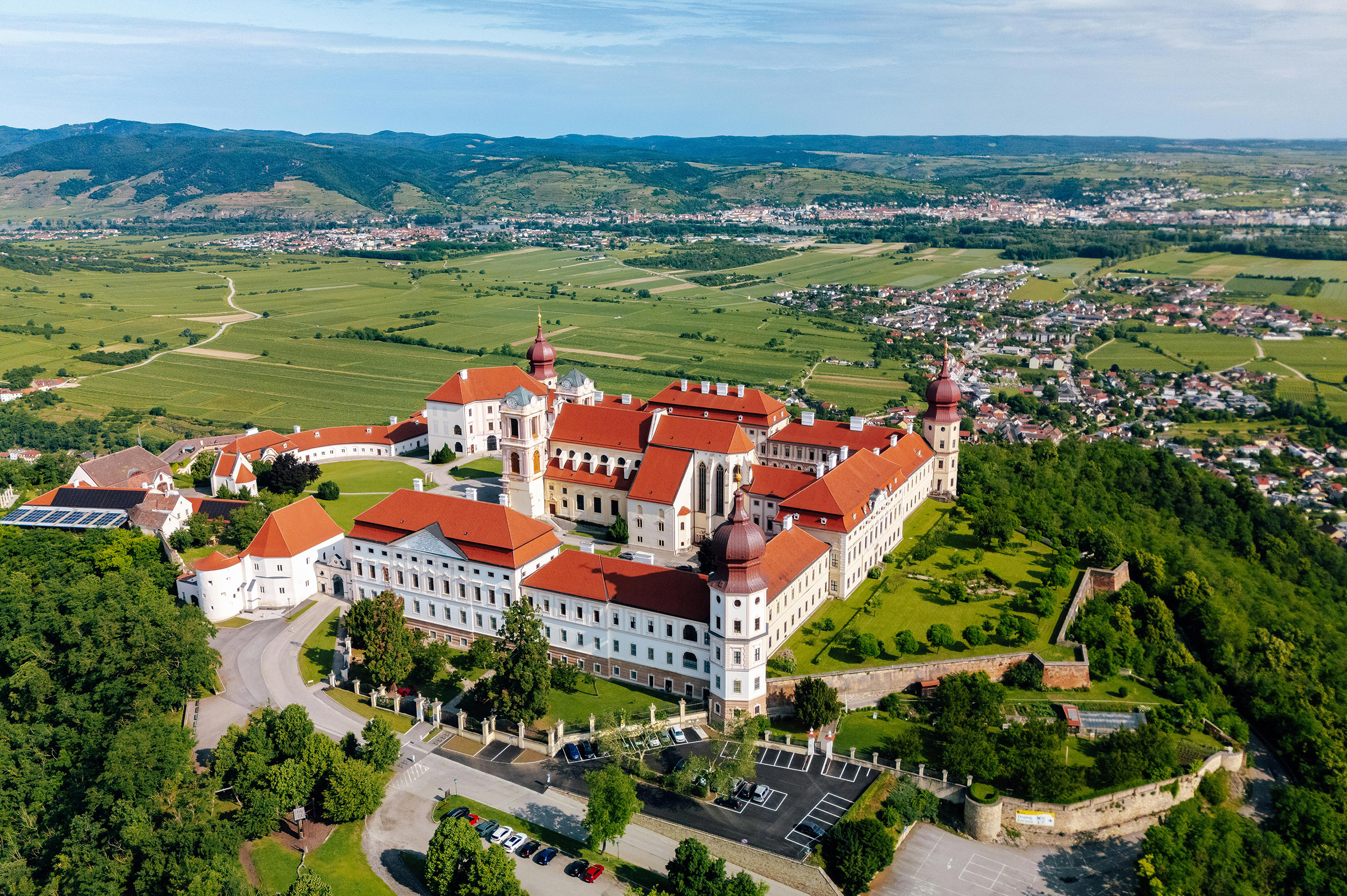
Göttweig Abbey (Stift Göttweig) is a Benedictine monastery on a wooded hill south of the Danube, opposite the town of Krems an der Donau, in Lower Austria. The abbey overlooks the Danube Valley and is often called the “Austrian Montecassino” because of its elevated position and impressive scale. Founded in 1083, it is best known today for its Baroque architecture by Johann Lucas von Hildebrandt and its panoramic views.
What is interesting to see
The main highlight of Göttweig Abbey is the Imperial Staircase, the largest Baroque staircase in Austria, with a huge ceiling fresco painted by Paul Troger in 1739. It leads into the Museum in the Imperial Wing, with the princely and imperial rooms where Empress Maria Theresa and Napoleon once stayed. Visitors can also see the abbey church, and from the balcony of the Altmann Hall and the terraces there are wide views over the Wachau vineyards, the Danube River, and the surrounding countryside. In the warmer months, the abbey’s apricot garden is free to visit.
Entrance tickets
Admission to the museum, including an audio guide, costs €14 for adults and €13 for seniors; children from 6 and students up to 25 pay €9, and a family ticket costs €25. A combined ticket with Melk Abbey is also available.
UNESCO World Heritage status
Since 2000, Göttweig Abbey has been part of the UNESCO World Heritage Site “Wachau Cultural Landscape.” Its inclusion recognizes the abbey’s historical importance and its strong visual and cultural connection to the Danube Valley, vineyards, and historic towns of the Wachau region.
How to get there
The easiest way to reach Göttweig Abbey is from the town of Krems an der Donau, which has direct trains from Vienna. The abbey lies about 6 km south of Krems; regional buses run from Krems towards Furth bei Göttweig, and a taxi takes about 10 minutes. Walking or cycling up to the abbey is possible for active travelers, but the climb is steep.


Weather in location: Göttweig Abbey, Austria
- Today 8°…17°
- Wind 1 km/h NE
- No precipitation now
Average by month
Monthly averages and dry days (no measurable rain) from ERA5, last 10 years.