19/05/2016
The Hofburg Palace Complex in Vienna, Austria, is a vast ensemble of palaces, squares, gardens, and museums that served as the residence of the Habsburg dynasty until the fall of the Austro-Hungarian Empire in 1918. Today, the Hofburg is the official residence of the President of Austria.
History and Architecture
Construction of the Hofburg began in the late 13th century, with successive rulers expanding and modifying the complex over several centuries. The oldest preserved section is the Swiss Courtyard (Schweizerhof), dating to the 15th–16th centuries, which houses the imperial treasury and a Gothic chapel.
The Hofburg consists of 19 buildings, 18 courtyards, and more than 2,600 rooms, representing a variety of architectural styles, including Gothic, Renaissance, Baroque, and Classicism. Each ruler contributed new wings, pavilions, and façades, often by acquiring and demolishing adjacent properties.
Layout and Attractions
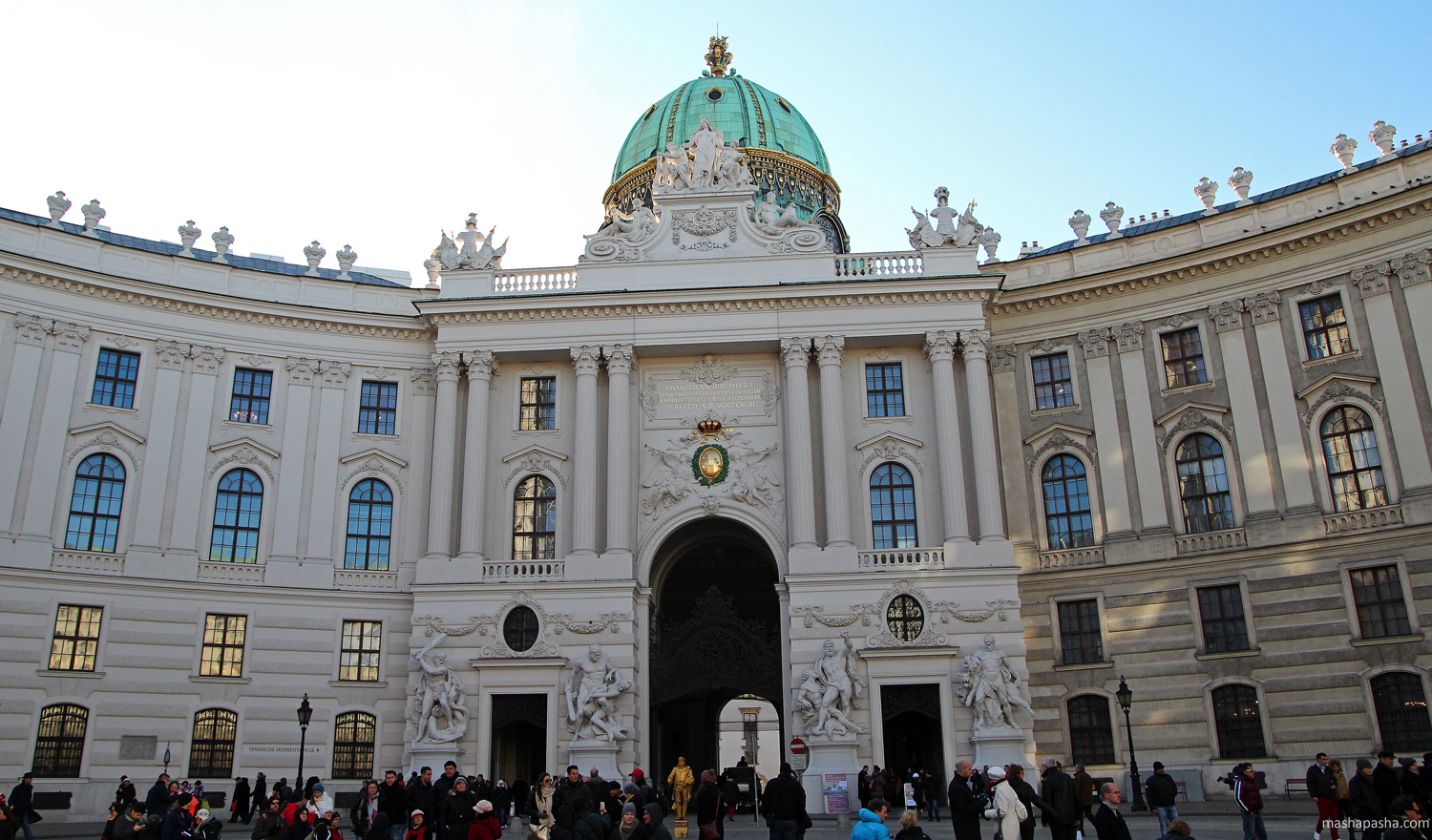
Visitors approaching from Graben Square via Kohlmarkt Street arrive at Michaelerplatz, where the Michaeler Wing forms one of the palace’s most iconic façades. Nearby stands St. Michael’s Church.
Passing through the archway leads to the Swiss Courtyard, the oldest part of the Hofburg, which provides access to the Imperial Treasury and the Hofburg Chapel, home to the renowned Vienna Boys’ Choir.
Beyond lies Heldenplatz (Heroes’ Square), framed by the Neue Burg (New Palace), which contains the Austrian National Library. Adjacent is the Burggarten, a landscaped park that includes a large palm house, now functioning as a butterfly house museum.
Museums
The Hofburg houses a wide range of museums and collections:
- Imperial Treasury – holds the crown of the Holy Roman Empire (962), Austrian imperial regalia, and Habsburg family jewels.
- Sisi Museum – dedicated to Empress Elisabeth of Bavaria (“Sisi”), featuring portraits and personal belongings.
- Silver Collection (Silberkammer) – displays Habsburg silverware, including a 30-meter-long imperial banquet table.
- Imperial Apartments – 19 rooms once used by the Habsburg family, including offices, bedrooms, and salons.
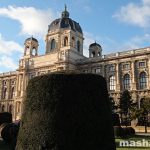
- Other institutions include the Papyrus Collection, Collection of Historic Musical Instruments, Imperial Armoury, Ephesus Museum, Museum of Ethnology, and parts of the Kunsthistorisches Museum (Museum of Art History).
Visitor Information
- Nearest metro: Herrengasse (U3 line).
- Opening hours: daily from 9:00 to 17:30 (or 18:00 in summer).
- Address: Hofburg, Vienna.


Weather in location: Hofburg palace, Vienna, Austria
Average by month
Monthly averages and dry days (no measurable rain) from ERA5, last 10 years.