







Egypt
The top sights and landmarks in Egypt showcase ancient wonders and Red Sea resorts. Visitors come for the Pyramids of Giza and the Sphinx near Cairo, the temples and Valley of the Kings around Luxor, cruises along the Nile, and world-class diving and beach resorts in Hurghada and Sharm el-Sheikh.

General information
Egypt is the land of the pharaohs, home to one of the world's oldest civilisations and its most iconic monuments — the Pyramids of Giza, the temples of Luxor and the treasures of the ancient Nile. Beyond the archaeology, it offers world-class diving and beach resorts along the warm Red Sea, vast deserts, and the chaotic energy of Cairo, the largest city in the Arab world. Arabic is the language, English is common in tourism, and Egypt combines awe-inspiring history with sun and sea at very affordable prices. Standard tourist areas are well established, though it is wise to check travel advice for certain remote regions.
Transport and how to get there
The main gateway is Cairo International Airport (CAI), with the Red Sea resorts served by Hurghada (HRG) and Sharm el-Sheikh (SSH), plus airports at Luxor (LXR) and Marsa Alam. Domestic flights link the main sites quickly, and the classic way to see the ancient south is a Nile cruise between Luxor and Aswan. Trains run along the Nile Valley, while within cities taxis and ride-hailing apps are the easiest way around; agreeing fares in advance is sensible.
Prices
Egypt is very affordable for foreign visitors, though the Egyptian pound has devalued sharply, so local prices change quickly and figures are best treated as a rough guide. Roughly, a mid-range hotel runs about 40-90 EUR per night (resort packages can be excellent value), a casual meal 5-12 EUR and street food far less. Entry to major sites such as the Giza pyramids or the Valley of the Kings ranges from around 15-25 EUR. The currency is the Egyptian pound (EGP); all figures are approximate and shift with the exchange rate.
Main attractions
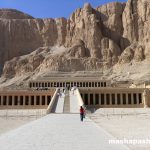
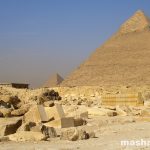
The Pyramids of Giza and the Great Sphinx are the eternal symbols of Egypt, best paired with the new Grand Egyptian Museum nearby. In the south, Luxor is an open-air museum — the vast Karnak and Luxor temples on one bank, the tombs of the Valley of the Kings on the other — while Aswan leads to the colossal rock temples of Abu Simbel. Cruise the timeless Nile, dive the coral reefs of the Red Sea at Hurghada or Sharm el-Sheikh, and haggle in Cairo's Khan el-Khalili bazaar amid the minarets of Islamic Cairo.