03/11/2025
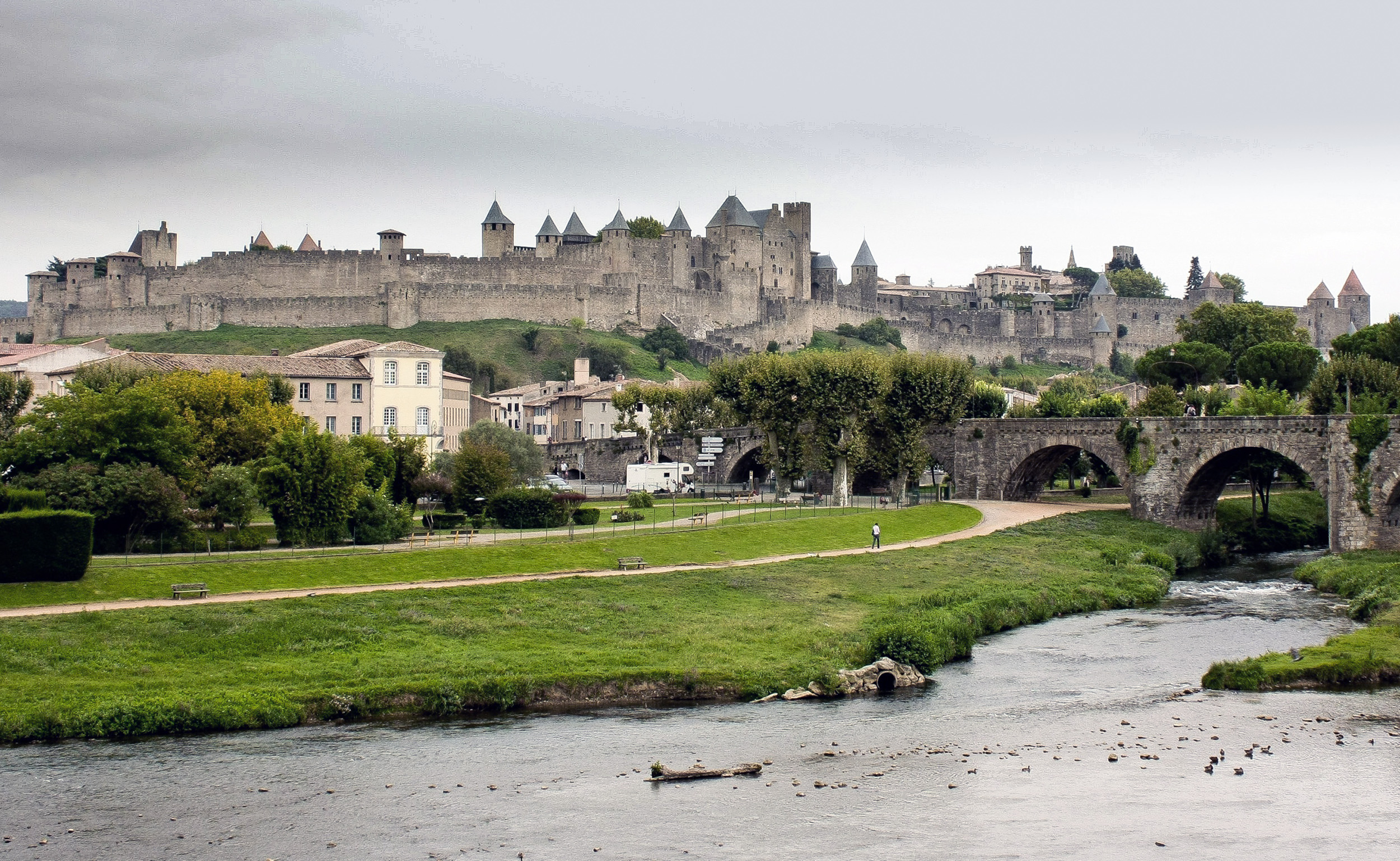
The Cité de Carcassonne is a medieval fortified city located in the Aude department of southern France, in the region of Occitanie. Perched on a hill overlooking the River Aude, the fortress is one of the most remarkable examples of medieval military architecture in Europe. Known for its double walls, towering battlements, and fairy-tale turrets, Carcassonne attracts millions of visitors each year and has been a UNESCO World Heritage Site since 1997.
History
The origins of the Cité de Carcassonne date back to ancient times. The site was first occupied by the Romans, who fortified it in the 3rd century AD. During the early Middle Ages, it became an important stronghold of the Visigoths and later a strategic fortress under the Franks.
In the 12th century the city was ruled by the powerful Trencavel family, who built the Château Comtal and made Carcassonne a centre of trade and administration. In 1209, during the Albigensian Crusade, it fell to the crusader army of Simon de Montfort, and in 1226 it became part of the French royal domain. Kings Louis IX and Philip III then added the outer ring of walls.
After centuries of decline, the fortress was saved from demolition in the 19th century and restored by the architect Eugène Viollet-le-Duc, whose slate-roofed turrets are still debated today.
Architecture
The Cité de Carcassonne is surrounded by nearly 3 kilometers of double defensive walls, punctuated by 52 towers and several fortified gates. The structure combines elements from the Roman, Romanesque, and Gothic architectural periods.
Key features include:
- The Château Comtal (Count’s Castle), located at the heart of the citadel, originally built in the 12th century and accessible today by a drawbridge.
- The Basilica of Saints Nazarius and Celsus, known for its stained glass windows and blend of Romanesque and Gothic styles.
- The Ramparts, which can be walked along for panoramic views of the surrounding countryside and the modern lower town.
- The Porte Narbonnaise, the grand eastern entrance, flanked by two impressive towers.
Visiting the Cité
Today, the Cité de Carcassonne is both a historical monument and a living town. Within the walls, visitors will find narrow cobblestone streets filled with shops, restaurants, and small hotels that preserve the medieval atmosphere.
Opening hours:
The streets and squares of the Cité are free and open at all times. The Château Comtal and ramparts are open from 10:00 to 18:30 from April to September and from 9:30 to 17:00 from October to March; last entry is 45 minutes before closing. They are closed on 1 January, 1 May and 25 December.
Admission fees:
The ticket for the castle and ramparts costs €19 from April to September and €13 from October to March. Entry is free for under-18s and for EU residents aged 18–25, and for everyone on the first Sunday of the month from January to March.
How to Get There
By train:
Carcassonne has a train station in the lower town (Ville Basse) with frequent connections from Toulouse, Montpellier, and Narbonne. From the station, the medieval city is about a 20-minute walk uphill or a short taxi ride.
By car:
Carcassonne is easily accessible by the A61 motorway, about 90 kilometers southeast of Toulouse and 60 kilometers west of Narbonne. Signposts direct visitors to the paid car parks below the Cité, as cars are not allowed inside the walls.
By plane:
Carcassonne Airport (Aéroport Sud de France Carcassonne) offers direct flights from several European cities. From the airport, the citadel is only a 15-minute drive.
What Makes It Famous
The Cité de Carcassonne is famous for its impressive medieval fortifications and its remarkable state of preservation. The double-walled structure, with its towers and gates, evokes the imagery of medieval Europe like few other sites.


Weather in location: Cité de Carcassonne castle, France
- Today 12°…15°
- Wind 26 km/h W
- No precipitation now
Average by month
Monthly averages and dry days (no measurable rain) from ERA5, last 10 years.