31/07/2026
Lübeck’s old town is the historic heart of the city that once styled itself the “Queen of the Hanseatic League,” and its dense island of brick churches, gabled merchant houses and narrow lanes is one of the finest medieval townscapes in northern Germany. Founded in 1143 and for centuries the leading city of the Hanse — the trading network that dominated the Baltic — Lübeck grew immensely wealthy, and that wealth is written across its architecture in soaring Backsteingotik, or North German Brick Gothic. The whole Altstadt, set on an oval island ringed by the River Trave and its canals, became in 1987 the first medieval city centre in northern Europe to be inscribed on the UNESCO World Heritage List. Though heavily bombed in 1942, it was faithfully rebuilt and still keeps its unmistakable skyline of seven green-copper church spires.
What to See
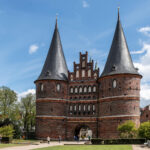
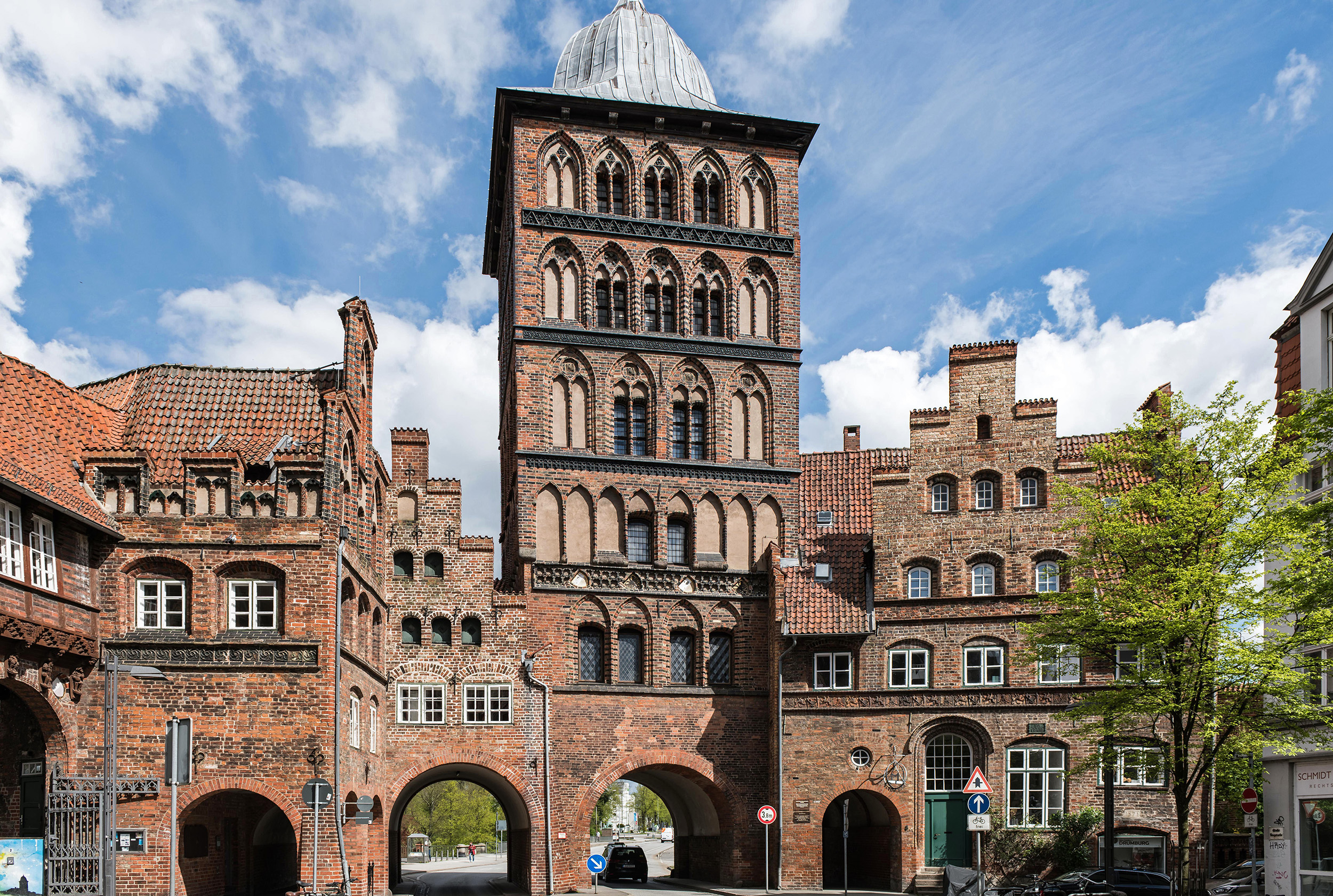
At the centre stands St Mary’s Church (Marienkirche), the mother church of Brick Gothic, whose vaults are the highest of any brick church in the world and which served as the model for scores of churches around the Baltic; nearby, the twin-towered Cathedral (Dom), St Peter’s with its viewing platform, St James’s and St Giles’s complete the famous seven spires. Facing the market square is the Town Hall (Rathaus), one of the oldest in Germany, a striking pile of glazed black-and-red brick pierced by decorative wind-holes. Around it spread the pleasures of the old town: the celebrated Niederegger café and marzipan shop opposite the Rathaus, the merchant mansions of the Buddenbrookhaus and the Günter Grass House that recall Lübeck’s two Nobel-laureate writers, the medieval Hospital of the Holy Spirit, and the countless tiny courtyards and alleyways (Gänge und Höfe) hidden behind the street frontages. At the western edge, the Holsten Gate and the old salt warehouses guard the approach to the island.
How to Get There and Practical Information
Lübeck lies in Schleswig-Holstein in northern Germany, less than an hour by frequent regional train from Hamburg and well connected to the Baltic coast. From Lübeck Hauptbahnhof it is a walk of five to ten minutes, past the Holsten Gate, into the old town, which is compact and best explored entirely on foot. Wandering the streets, squares and courtyards is free at any time, while individual sights such as the churches, museums and the Niederegger marzipan salon keep their own hours and some charge admission. Allow at least a half-day — better a full one — to take in the churches, the Rathaus and a marzipan break, and consider a short boat trip around the island for the classic view of the seven spires rising above the water.


Weather in location: Lübeck old city, Germany
- Today 8°…16°
- Wind 9 km/h S
- No precipitation now
Average by month
Monthly averages and dry days (no measurable rain) from ERA5, last 10 years.