





23/03/2024
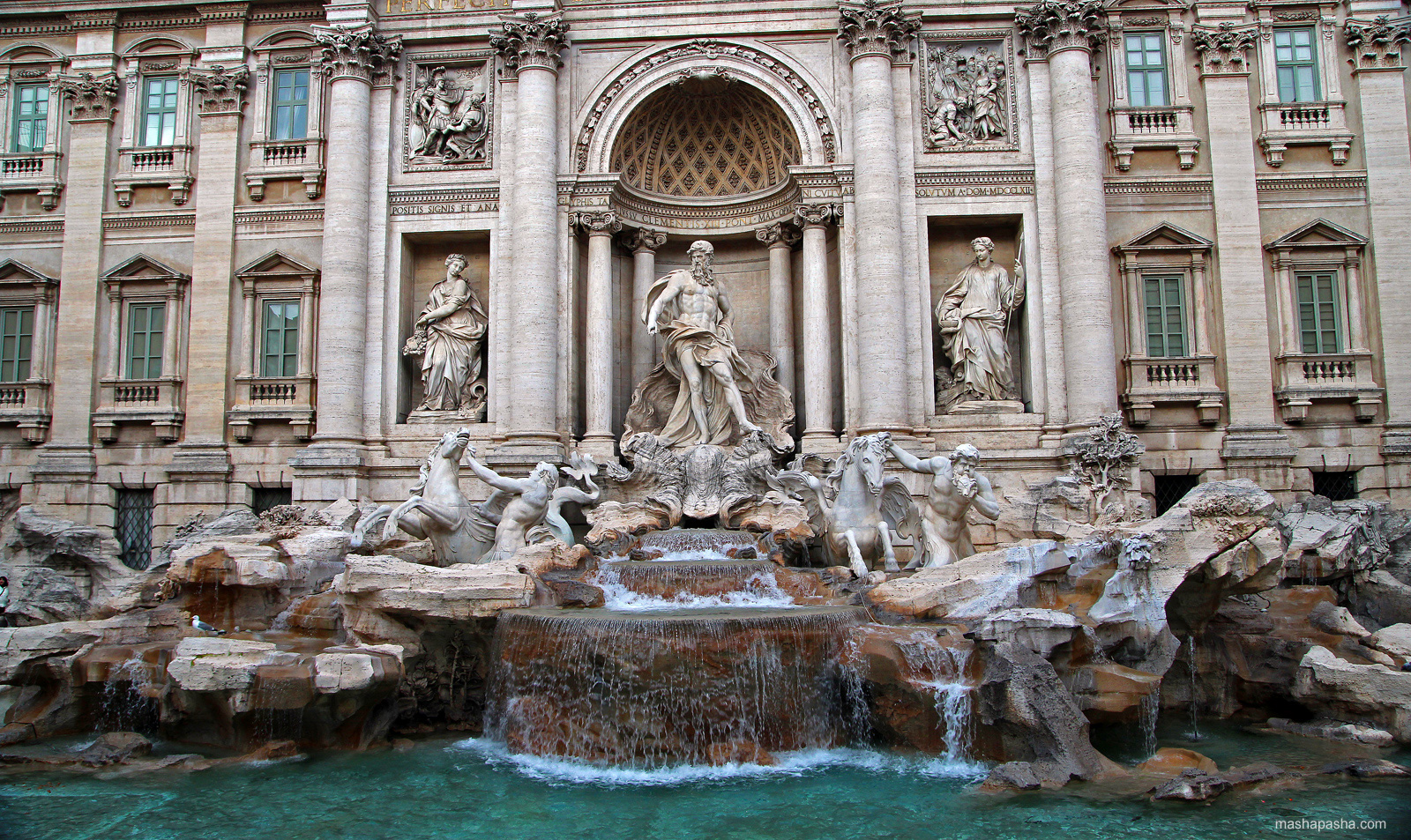
The Trevi Fountain (Fontana di Trevi) is the largest Baroque fountain in Rome and one of the most famous fountains in the world. It fills almost the whole side of a small square about 250 metres from Via del Corso and is built against the façade of Palazzo Poli. The fountain marks the end of the Aqua Virgo, the aqueduct that Agrippa built in 19 BC to bring spring water into the city from about 20 kilometres away.
Pope Clement XII held a design competition in 1730, which Nicola Salvi won. Work began in 1732, and after Salvi’s death in 1751 Giuseppe Pannini completed the fountain in 1762. It is 26.3 metres high and 49.15 metres wide, built of travertine with marble statues.
In the centre, Oceanus stands on a shell-shaped chariot pulled by two sea horses, each led by a Triton: one horse is calm and the other restless, showing the two moods of the sea. The niches on either side hold the statues of Abundance and Health, and the reliefs above them show Agrippa approving the aqueduct and the young girl who, according to legend, showed Roman soldiers the spring.
The coin tradition
Tradition says that a coin thrown over the left shoulder with the right hand guarantees a return to Rome; two coins bring a new romance and three a wedding. About €1.5 million is collected from the basin every year, and the money goes to the Catholic charity Caritas. The fountain stars in films such as “Three Coins in the Fountain” (1954) and Fellini’s “La Dolce Vita” (1960), with Anita Ekberg’s famous night-time scene in the water.
Visiting
Since 2 February 2026 visitors who do not live in Rome pay €2 to enter the area right by the basin; the fountain can still be seen for free from the square. The square is crowded all day, so come early in the morning or late in the evening, when the fountain is lit. The last major restoration, paid for by the fashion house Fendi, took place in 2014–2015.
Key Facts
- Built: 1732–1762; architects Nicola Salvi and Giuseppe Pannini.
- Size: 26.3 m high and 49.15 m wide.
- Tickets (2026): €2 for the basin area, Mondays and Fridays 11:30–22:00, other days 9:00–22:00 (last entry 21:00); free for Rome residents and children under 6.
- Getting there: about 10 minutes on foot from metro A Barberini.


Weather in location: Trevi Fountain, Rome
- Today 6°…15°
- Wind 5 km/h NE
- No precipitation now
Forecast data: Open-Meteo.com
Average by month
Monthly averages and dry days (no measurable rain) from ERA5, last 10 years.