13/06/2019
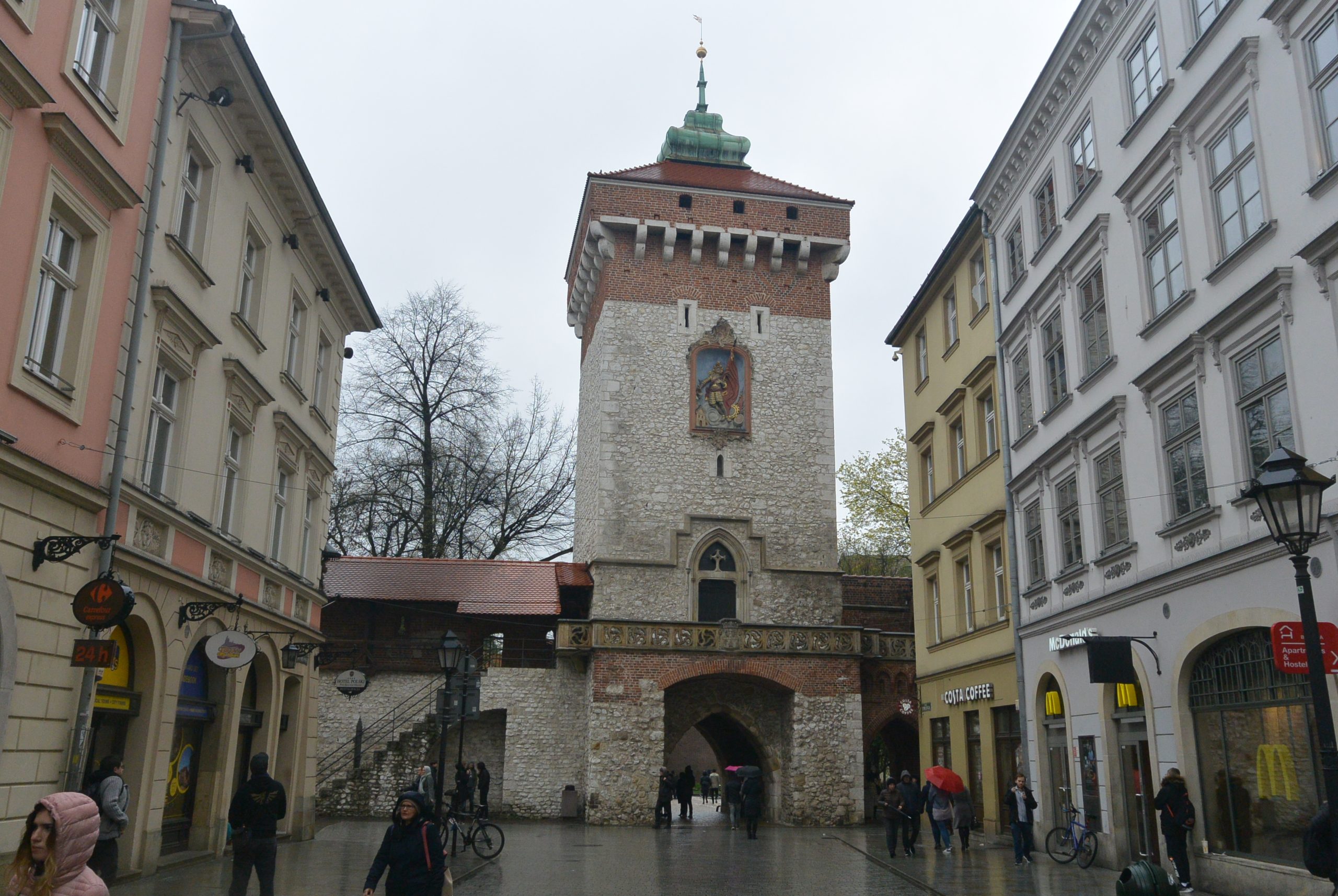
The Florian Gate (Brama Floriańska) is one of the oldest and most significant historic landmarks in Krakow. First mentioned in 1307, it marked the starting point of the famous Royal Route—the ceremonial path that led through the Old Town to Wawel Castle. Monarchs, ambassadors, and distinguished guests would enter the city through this gate. Later, the Krakow Barbican, a separate fortress, was added nearby to provide extra protection.
Preservation and History
In the 19th century, when Krakow’s medieval defensive walls lost their military importance, many were demolished. However, thanks to the intervention of Feliks Radwański, a professor at the Jagiellonian University, the Florian Gate and the Barbican were preserved. He argued that the remaining fortifications would protect the city from harsh northern winds. Today, the Florian Gate, a section of the wall, and the Barbican are the only surviving parts of Krakow’s medieval fortifications.
Architecture and Features
- The Florian Tower rises to a height of 34.5 meters.
- The outer side of the gate, facing the Barbican, bears the Polish white eagle; the inner side, facing Floriańska Street, has a relief of St. Florian.
- Inside the passageway there is a small altar with an image of the Virgin Mary.
Passing through the archway of the gate, visitors enter Floriańska Street, one of Krakow’s main thoroughfares. Walking straight leads to the Main Market Square (Rynek Główny) and the impressive St. Mary’s Basilica. Continuing further brings you to the iconic Wawel Castle.
Krakow’s Medieval Fortifications
In its prime, Krakow’s defensive system included:
- 47 towers and 7 gates surrounding the city.
- An outer defensive wall and a water-filled moat.
Most of these fortifications were destroyed in the 19th century. Today, their place is taken by the beautiful Planty Park, a green belt encircling the Old Town.


Weather in location: Florian Gate and fortress walls, Krakow
- Today 8°…14°
- Wind 11 km/h W
- No precipitation now
Average by month
Monthly averages and dry days (no measurable rain) from ERA5, last 10 years.