22/01/2026
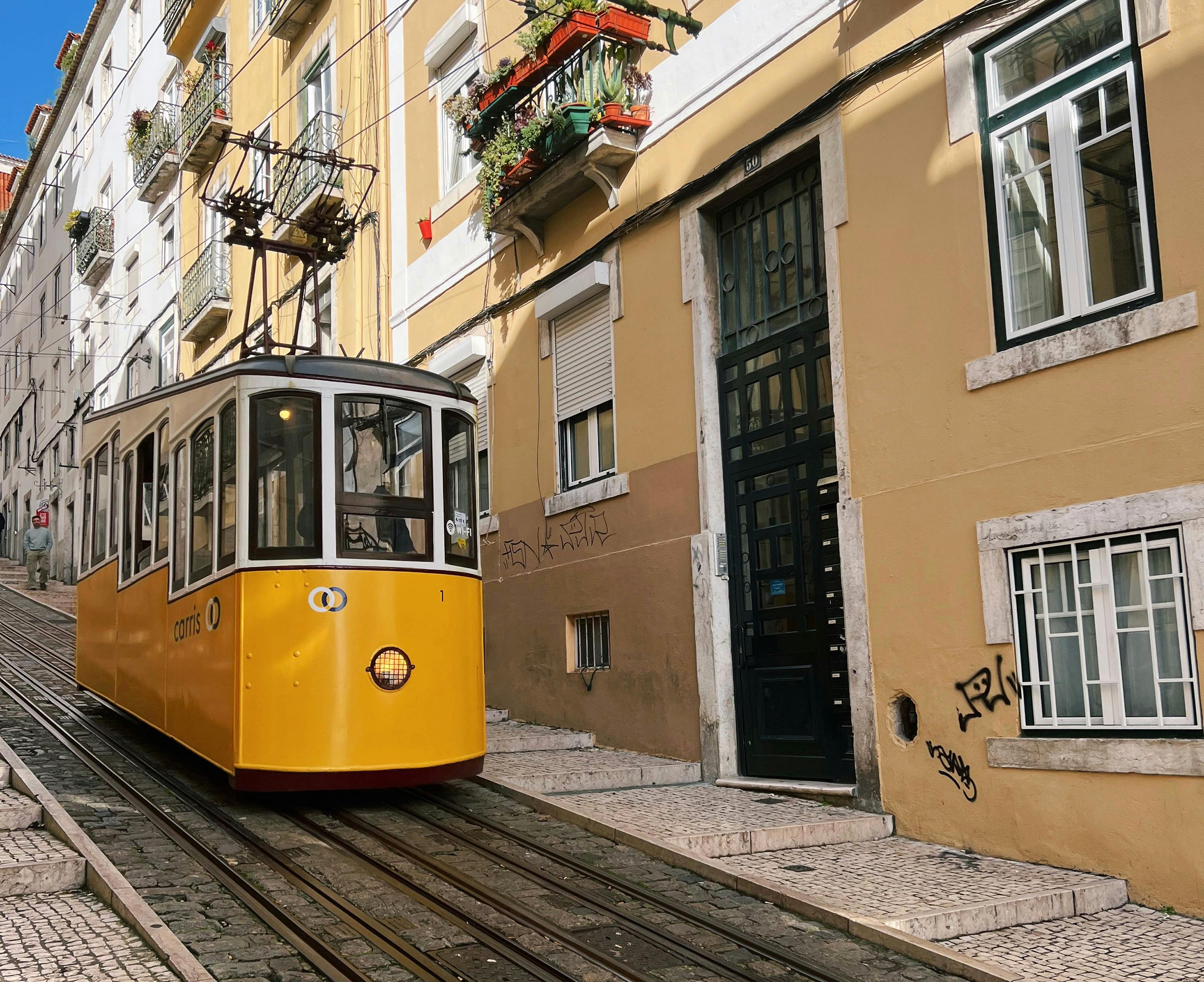
Lisbon is famous for its hills, narrow streets and historic public transport. Its three historic funiculars – Glória, Bica and Lavra – look like classic trams but are pulled up and down very steep streets by cable. They were built in the late 19th century and are run by Carris as part of the city’s public transport network.
Status in 2026: all three historic funiculars have been closed since 3 September 2025, when the Glória funicular derailed and 16 people died. An independent technical commission is still assessing Bica and Lavra, and no reopening date had been announced by autumn 2026, so check with Carris before you go. The modern Graça funicular reopened on 30 April 2026 and runs daily from 9:00 to 17:00.
Glória Funicular
The Glória Funicular connects Restauradores Square with the Bairro Alto district. It runs along Rua da Glória, one of the steepest streets in central Lisbon.
- Opened: 1885
- Route: Restauradores → Bairro Alto
- Length: approx. 265 m
- Purpose: Quick access from the city center to nightlife areas and viewpoints
Until the 2025 accident it was the busiest and best-known funicular in Lisbon and the quickest way up to Bairro Alto.
Ascensor da Bica
The Bica Funicular runs along the narrow and scenic Rua da Bica de Duarte Belo, connecting the riverside area with the higher Calçada do Combro.
- Opened: 1892
- Route: Rua de São Paulo → Largo do Calhariz
- Length: approx. 245 m
- Slope: one of the steepest in the city
This line is famous for its postcard views, colorful buildings, and strong connection to Lisbon’s traditional neighborhoods. It is one of the most photographed transport lines in Portugal.
Ascensor do Lavra
The Lavra Funicular is the oldest funicular in Lisbon and the least touristy.
- Opened: 1884
- Route: Largo da Anunciada → Rua Câmara Pestana
- Length: approx. 188 m
- Area: quieter residential zone
Unlike Glória and Bica, Lavra was used mostly by locals and serves a quieter, more everyday part of the city.
Tickets and Prices
When they run, the funiculars are part of the Carris network: you can pay on board or use a Navegante or Viva Viagem card or a 24-hour Carris/Metro pass, which also covers trams, buses and the metro.
Why They Are Unique
Lisbon’s funicular trams are special because they:
- Combine tram-style vehicles with a cable system
- Were built specifically for very steep urban streets
- Are well over 100 years old
- Are fully integrated into the city’s transport system
They are not just tourist attractions, but working transport lines that reflect Lisbon’s geography, history, and daily life.


Weather in location: Lisbon cable funicular – trams, Portugal
- Today 17°…24°
- Wind 4 km/h NW
- No precipitation now
Average by month
Monthly averages and dry days (no measurable rain) from ERA5, last 10 years.