22/03/2024
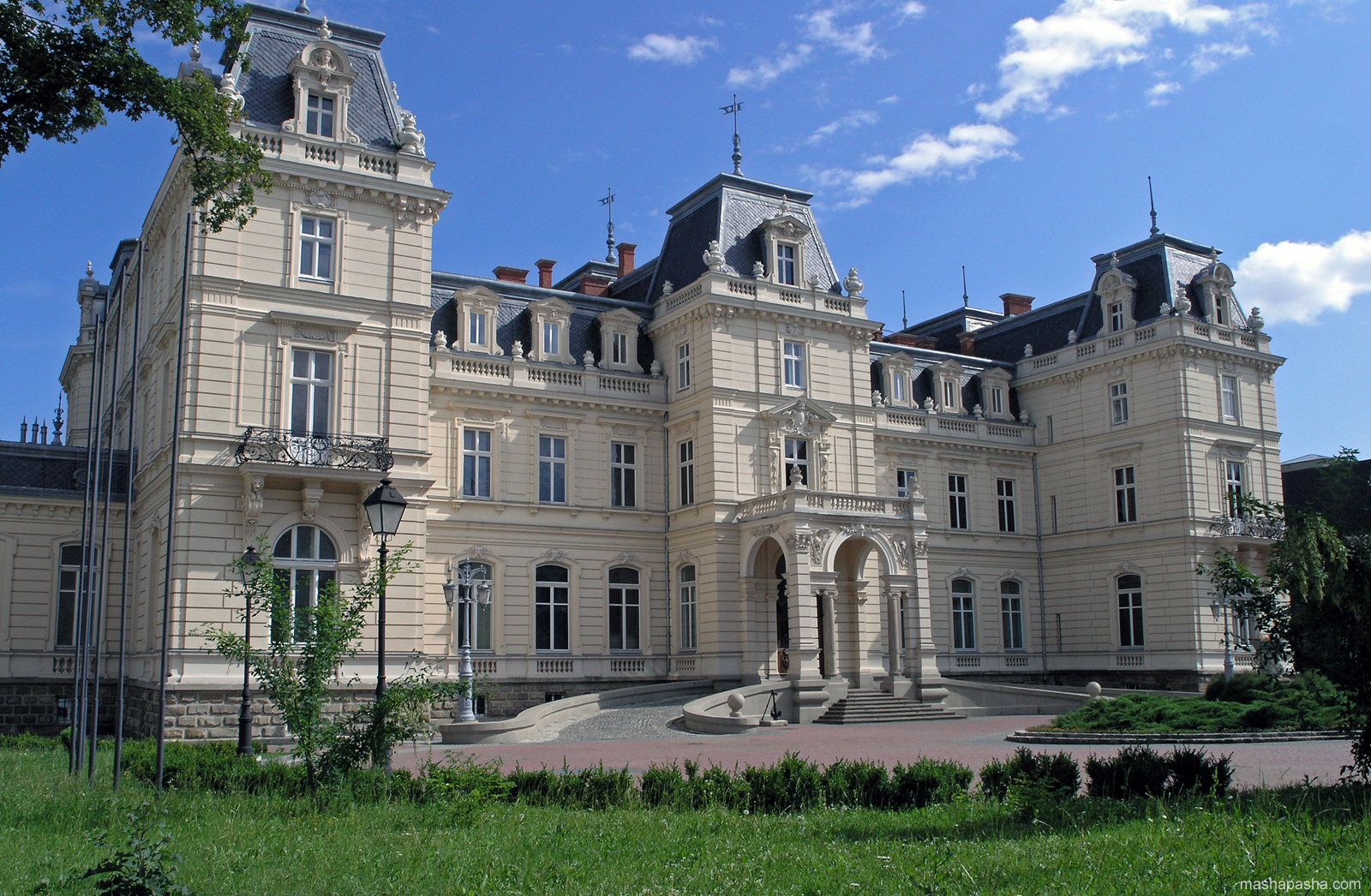
Potocki Palace is a French-style aristocratic residence on Kopernyka Street in Lviv, a 5–7-minute walk from Rynok Square. It was commissioned by Count Alfred Józef Potocki, a former governor of Galicia, and designed by the Parisian architect Louis Dauvergne, with the Lviv architect Julian Cybulski supervising the works. Potocki died in 1889, and his son Roman completed the palace around 1890.
Architecture
The palace follows French classical models, with light façades and a grey mansard roof that recall Parisian town houses. An arched portico marks the central entrance, and the small court in front of it once served as a carriage drive. The large park that surrounded the estate has mostly been built over: only a lawn behind the palace and a few old trees remain.
History
The Soviet authorities confiscated the palace in 1940. From 1945 to 1972 it housed a geological research institute, and from 1975 some of its rooms served as the city’s wedding palace. In 2002 the building was handed over to the Lviv National Art Gallery, which restored it and opened it as a museum in 2007. In 2016 the palace hosted the Women’s World Chess Championship match.
Inside
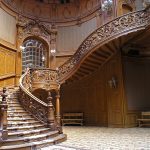
The restored state rooms are named after their décor, such as the Blue, Red and Mirror (ballroom) halls, and are richly finished with gilding, stucco and marble. Across two floors the gallery shows its collection of European art from the 14th to 18th centuries, with works from Ukraine, Poland, Austria, Germany, the Netherlands, Italy, France and Spain; the best-known piece is Georges de La Tour’s The Payment. Allow about an hour for the visit.
Key Facts
- Address: Kopernyka Street 15, Lviv.
- Built: 1880s, completed around 1890; architect Louis Dauvergne.
- Hours: Wednesday to Sunday 10:00–18:00 (ticket office until 17:30); closed on Mondays and Tuesdays.
- Tickets (2026): 200 UAH; students 150 UAH; children and pensioners 100 UAH.


Weather in location: Potocki Palace, Lviv
- Today 8°…9°
- Wind 13 km/h W
- No precipitation now
Average by month
Monthly averages and dry days (no measurable rain) from ERA5, last 10 years.