





03/02/2024
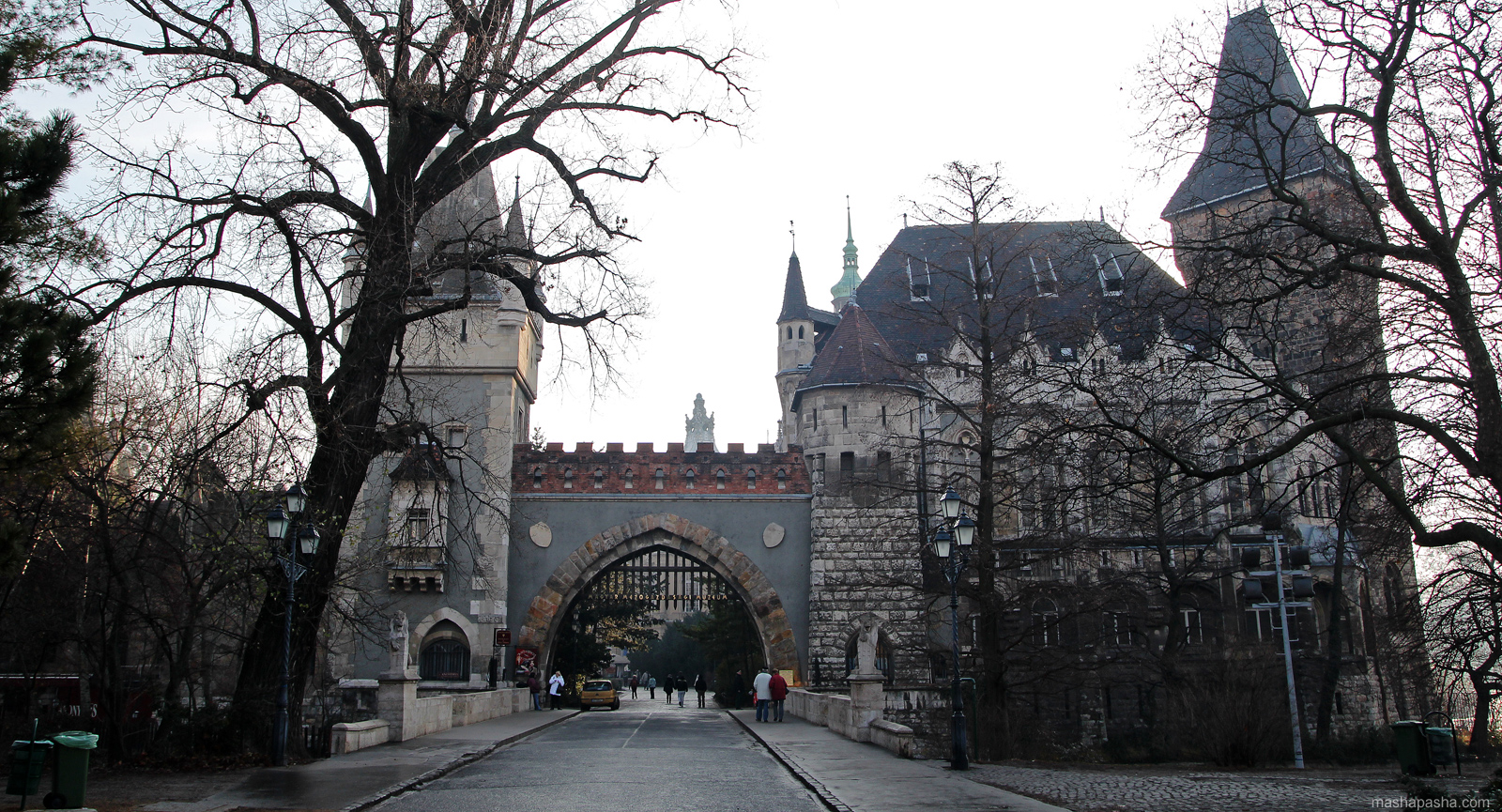
Vajdahunyad Castle (Hungarian: Vajdahunyad vára) is a decorative architectural complex in Városliget, the City Park of Budapest. Architect Ignác Alpár designed it for the Millennial Exhibition of 1896, which celebrated a thousand years since the Hungarian conquest of the Carpathian Basin, combining copies and details of 21 historic buildings from across the former Kingdom of Hungary. The first version was built of wood and cardboard as a temporary pavilion, but it became so popular that it was rebuilt in stone and brick between 1904 and 1908.
The castle stands on an island in the City Park lake, just behind Heroes’ Square. Visitors cross a small bridge and enter through a Gothic gate tower; the courtyard is free to enter. The complex is arranged by style, from Romanesque through Gothic to Renaissance and Baroque. Its best-known part copies Corvin Castle (Vajdahunyad) in Hunedoara, Transylvania, which gave the complex its name; there is also a tower modeled on Sighișoara (Segesvár) and a chapel whose portal copies the Romanesque abbey church of Ják, where Mass is still held. In the courtyard sits the hooded statue of Anonymus, the medieval chronicler, by Miklós Ligeti (1903); touching his pen is said to bring writing talent.
Despite its fortress-like appearance, Vajdahunyad Castle was never a defensive structure; behind the Baroque palace the buildings simply end in the park. The palace houses the Hungarian Museum of Agriculture, one of the largest agricultural museums in Europe (entry with a ticket). In winter the lake in front of the castle becomes the City Park Ice Rink, one of the largest outdoor rinks in Europe.
Key points:
- Built: 1896 as a temporary pavilion; rebuilt in stone in 1904–1908 (architect Ignác Alpár).
- Location: City Park (Városliget), Budapest, behind Heroes’ Square (Hősök tere).
- Getting there: M1 metro, Hősök tere or Széchenyi fürdő station.
- Styles: Romanesque, Gothic, Renaissance and Baroque, copied from 21 historic buildings.
- Highlights: Gothic gate tower, Ják Chapel, statue of Anonymus.
- Entry: courtyard free; the Hungarian Museum of Agriculture requires a ticket.
- Nearby: Heroes’ Square, Széchenyi Thermal Bath, City Park Ice Rink (winter).


Weather in location: Vajdahunyad Castle, Budapest
- Today -1°…2°
- Wind 10 km/h NE
- No precipitation now
Forecast data: Open-Meteo.com
Average by month
Monthly averages and dry days (no measurable rain) from ERA5, last 10 years.