08/06/2016
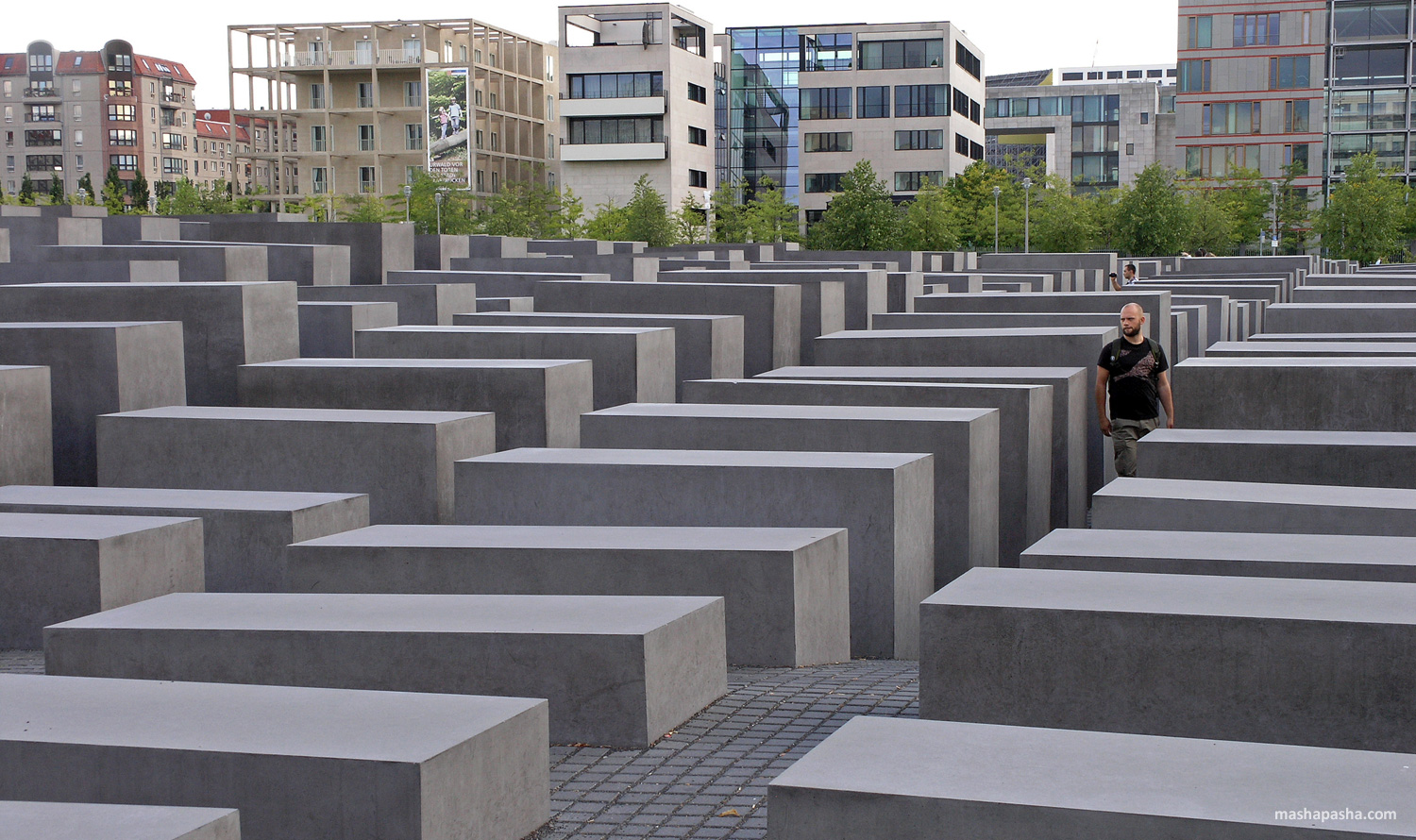
The Memorial to the Murdered Jews of Europe, commonly known as the Berlin Holocaust Memorial, is a deconstructivist architectural project designed by Peter Eisenman and completed in 2005. The monument commemorates the victims of Nazi persecution and the genocide of Jews during the Holocaust.
Location
The memorial is situated in central Berlin, near Brandenburg Gate and adjacent to Tiergarten Park, approximately halfway between the gate and Potsdamer Platz.
Design and Features
The site occupies an entire city block and consists of more than 2,700 concrete slabs (stelae) of varying heights and dimensions arranged in a grid pattern. The arrangement creates a labyrinthine effect, intended to evoke a sense of disorientation and reflection. The slabs are unadorned, emphasizing form and spatial experience rather than figurative representation.
Significance
The Holocaust Memorial is one of the few public sites in Berlin that directly addresses the events of the Third Reich and World War II. It serves both as a place of remembrance and a site for public education. Visitors are encouraged to walk through the memorial to experience its scale and layout.
Visitor Information
The memorial is open to the public at all times and does not charge an entrance fee. A visitor center located nearby provides exhibitions and educational materials on the Holocaust, offering historical context for the monument.


Weather in location: Holocaust Memorial in Berlin
- Today 9°…13°
- Wind 8 km/h NW
- No precipitation now
Average by month
Monthly averages and dry days (no measurable rain) from ERA5, last 10 years.