19/11/2025
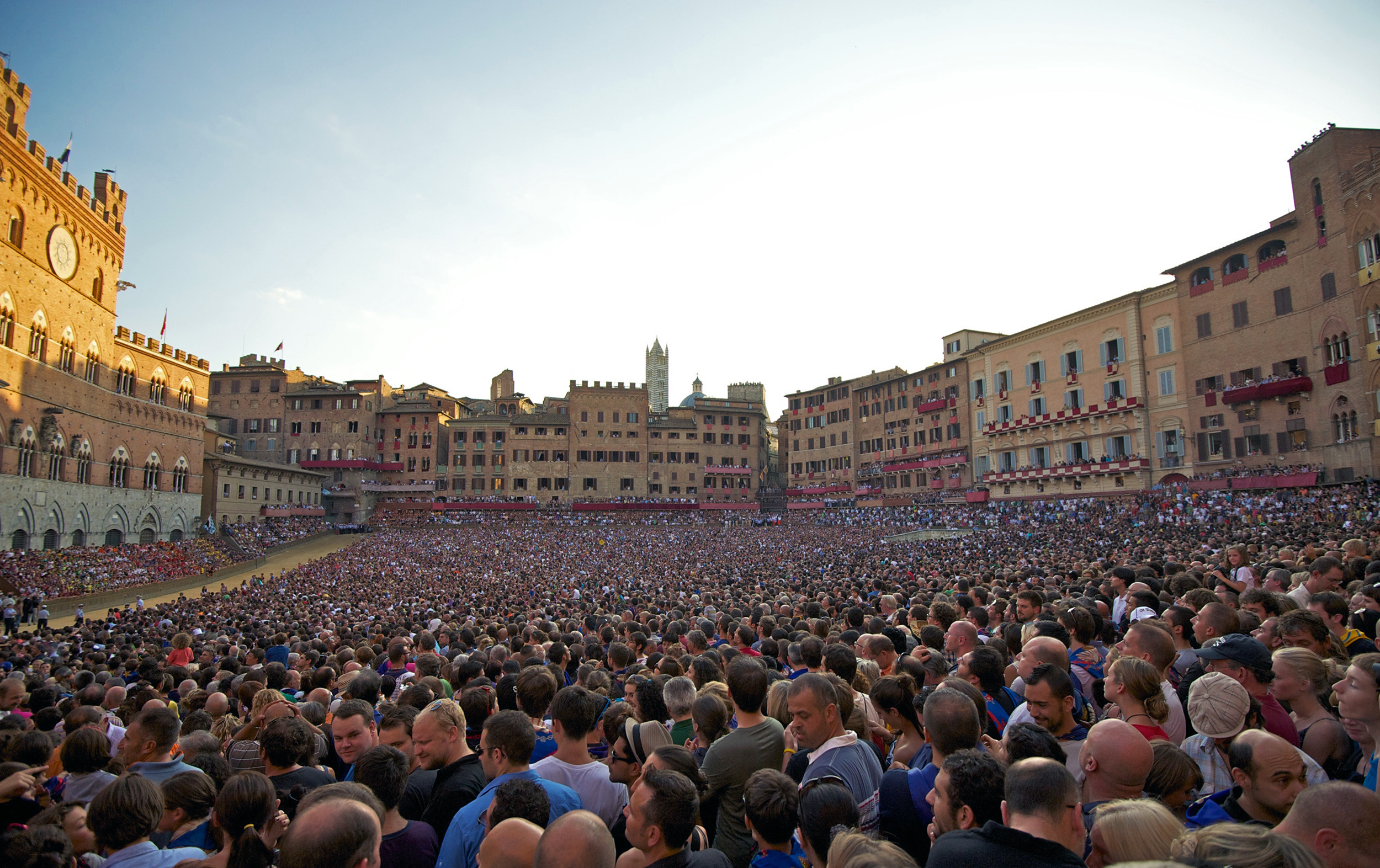
Palio di Siena is a traditional horse race held twice each year in the historic city of Siena, located in the Tuscany region of Italy. The Palio is a celebration of local identity, medieval traditions, and communal pride, attracting thousands of visitors from around the world. The origins of the Palio date back to the 13th century, when horse races were organized as part of religious and civic celebrations in Siena. The race evolved over time into a competition between the city’s contrade—the 17 official city districts, each with its own emblem, colors, and identity. The modern Palio, held in the Piazza del Campo, preserves much of its medieval ceremonial style, including historic costumes, parades, and blessings.
Schedule and Timing
The Palio di Siena occurs twice annually:
- Palio di Provenzano on July 2, in honor of the Madonna of Provenzano.
- Palio dell’Assunta on August 16, in honor of the Assumption of the Virgin Mary.
In addition to the race days, the event spans several days with rehearsals, parades, horse blessings, and competitions, allowing visitors to experience the full cultural and festive atmosphere.
Each Palio is contested by ten of the 17 contrade: the seven that did not run in the same race the year before, plus three drawn by lot. The race in its present form, with laps around the Campo, has been held since 1656 in July and since 1701 in August.
Location and Route
- The race takes place in the Piazza del Campo, the main square of Siena, which is famous for its distinctive shell shape and historic architecture.
- Horses run three laps around the square, a total distance of approximately 1 kilometer, with tight turns that demand both skill and courage from jockeys and horses.
- The entire city is involved in the festivities, with each contrada decorating streets, piazzas, and windows in its colors and hosting public celebrations.
Ceremonial Events and Parade
- Before the race, there is a historical parade (Corteo Storico), where participants dress in medieval costumes representing Siena’s history and the 17 contrade. The parade includes flag bearers, drummers, musicians, and representatives of local nobility.
- In the three days before the race, six trial heats (prove) are run in the square, and on race day each horse is blessed in the church of its contrada.
- On race day, a pageant procession brings the jockeys and horses to the starting point, followed by the dramatic and competitive horse race.
The Race
- The Palio is a bareback horse race, often lasting less than 90 seconds, but it is highly intense and competitive.
- Jockeys represent their contrade, and victory is not only a matter of speed but also of strategy and experience navigating the crowded track.
- The winning contrada receives the drappellone, a painted silk banner, and celebrates its victory with feasts, processions, and public festivities that last for days.
Watching the Palio
Standing in the center of the Campo is free, but the square fills up hours before the race and spectators cannot leave until it is over. Seats on the wooden stands and balconies around the square are sold privately for several hundred euros. If bad weather forces a postponement, the race is moved to the following day.
Weather in location: Palio di Siena, Italy
- Today 10°…23°
- Wind 7 km/h W
- No precipitation now
Average by month
Monthly averages and dry days (no measurable rain) from ERA5, last 10 years.