29/03/2024
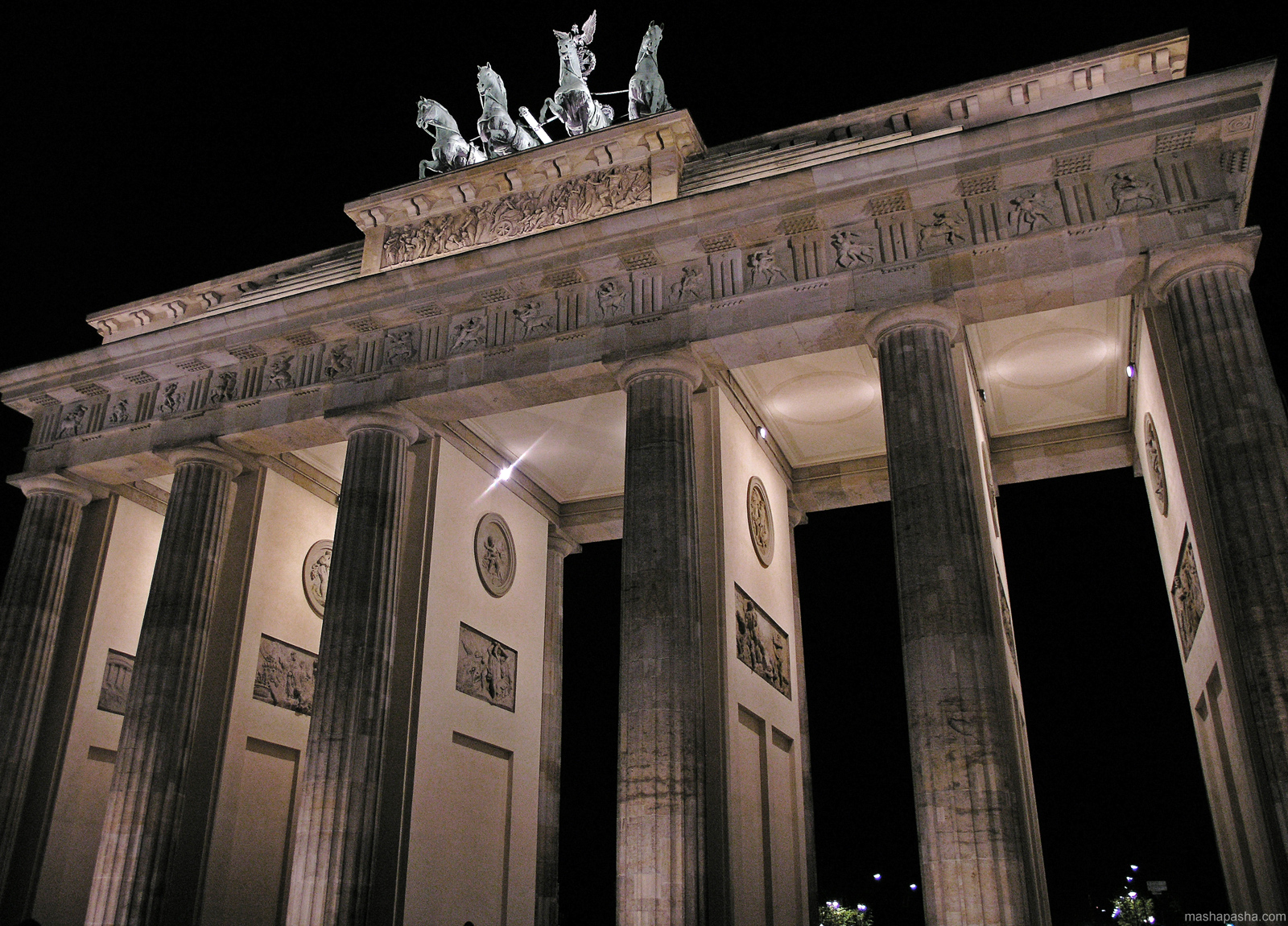
The Brandenburg Gate (Brandenburger Tor) is the symbol of Berlin and of German reunification. Carl Gotthard Langhans built it in 1788–1791 for King Frederick William II, modelled on the Propylaea of the Athenian Acropolis, as one of the 18 gates in the city’s customs wall — and it is the only one that survives. The sandstone gate is about 26 metres high and 65 metres wide, with twelve Doric columns forming five passages.
On top stands the Quadriga by Johann Gottfried Schadow: the goddess of victory driving a chariot drawn by four horses. Napoleon took it to Paris in 1806; after its return in 1814 it received the Iron Cross and the Prussian eagle. The gate was first called the Gate of Peace, but it later served for military parades, including the Nazi torchlight march of 1933. Badly damaged in the Second World War, it stood in the no-man’s-land of the Berlin Wall from 1961 until it reopened on 22 December 1989, and it was fully restored in 2000–2002.
The gate closes the boulevard Unter den Linden at Pariser Platz, with the Tiergarten park and the Straße des 17. Juni on the other side and the Reichstag a few minutes’ walk to the north. It is free and open at all hours; the north wing houses a small Room of Silence for quiet reflection. Brandenburger Tor station (U5 and S-Bahn) is right next to it.


Weather in location: Brandenburg Gate, Berlin
- Today 6°…16°
- Wind 5 km/h S
- No precipitation now
Average by month
Monthly averages and dry days (no measurable rain) from ERA5, last 10 years.