03/04/2024
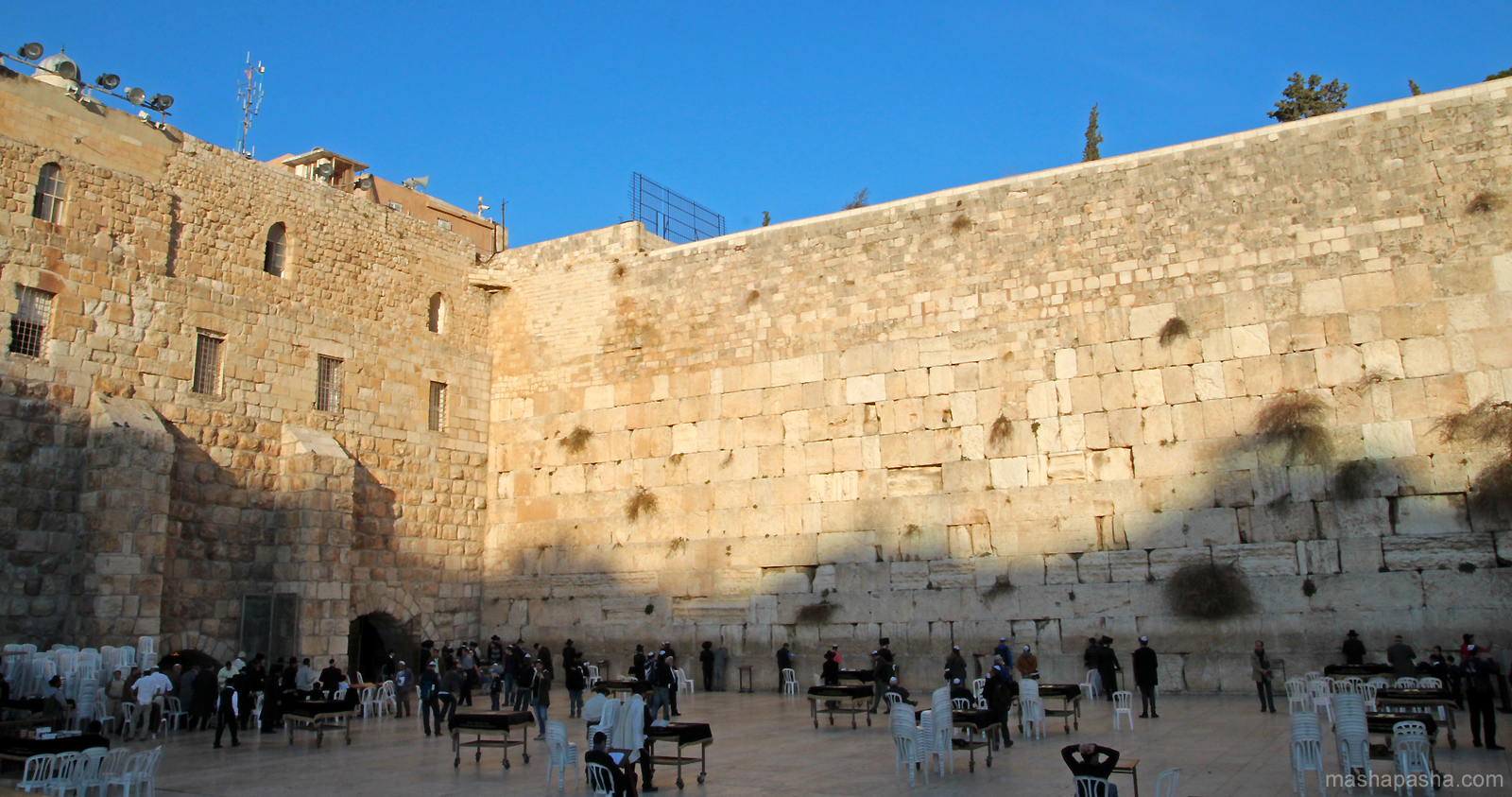
The Western Wall (HaKotel HaMa’aravi, often called the Wailing Wall) in Jerusalem’s Old City is the holiest place where Jews are permitted to pray. It is not a remnant of the Temple building itself but a section of the retaining wall that King Herod the Great built around the Temple Mount when he enlarged it from about 19 BC; the Second Temple on top of the mount was destroyed by the Romans in AD 70.
The wall faces a large plaza at the edge of the Jewish Quarter. Above it, on the Temple Mount, which Muslims call al-Haram al-Sharif, stand the Dome of the Rock and the Al-Aqsa Mosque.
Visiting the Western Wall:
- The plaza is open 24 hours a day, every day, and entry is free (2026).
- All visitors pass through a security check with metal detectors at the entrances; free toilets are available near the plaza.
- The prayer area is divided by a partition: the larger section on the left is for men, the section on the right for women. A separate mixed prayer area is at Robinson’s Arch, further south along the wall.
- Men must cover their heads; disposable kippot are handed out free of charge. Modest dress with covered shoulders and knees is expected.
- On Shabbat (from Friday evening to Saturday evening) and on Jewish holidays, photography and phone use are not allowed at the wall.
- The Western Wall Tunnels, which follow the wall underground to the north, can only be visited on a paid guided tour booked in advance with the Western Wall Heritage Foundation.
About the Wall:
- The exposed prayer section is about 57 metres long, but the whole western wall of the Temple Mount runs for 488 metres; most of it is hidden behind later buildings or underground.
- Above the plaza the wall rises about 19 metres, while its total height from the foundations is about 32 metres, because the ground level has risen over the centuries.
- The wall consists of 45 courses of stone, 28 above ground and 17 below. Most of the Herodian blocks weigh 2–8 tons; the largest, the Western Stone in the tunnels, is about 13.6 metres long and, according to recent measurements, weighs around 250–300 tons.
Traditions:
For about 300 years people have tucked notes with prayers into the cracks between the stones. Today visitors of all faiths keep up the custom and leave more than a million notes every year; twice a year, before Passover and Rosh Hashanah, the notes are collected and buried on the Mount of Olives.


Weather in location: The Western Wall, Jerusalem
- Today 17°…24°
- Wind 22 km/h W
- No precipitation now
Average by month
Monthly averages and dry days (no measurable rain) from ERA5, last 10 years.