12/02/2024
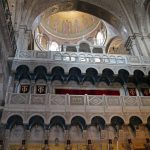
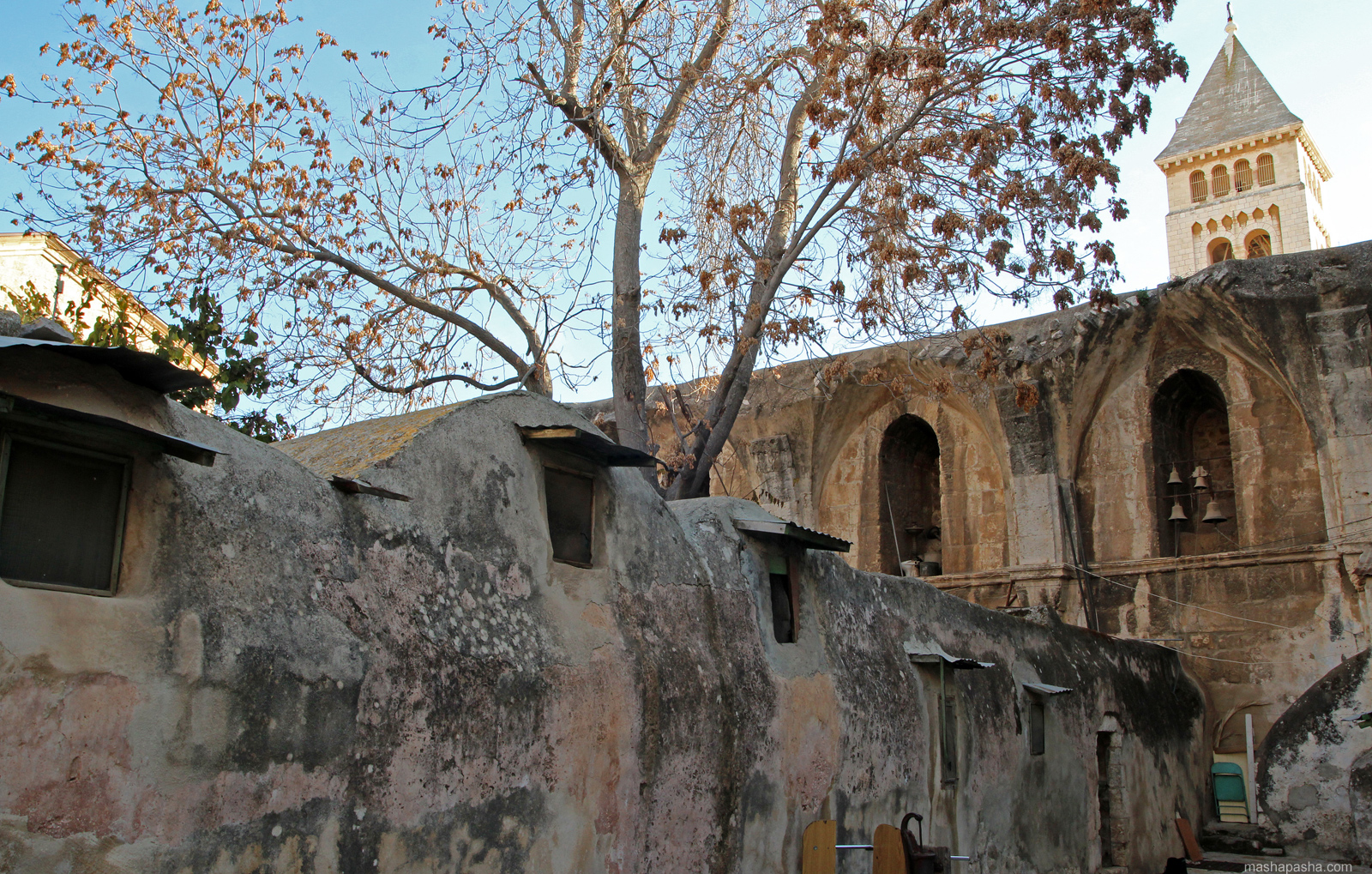
Deir es-Sultan (Arabic for “Monastery of the Sultan”) is a small monastery on the roof of the Church of the Holy Sepulchre in Jerusalem’s Christian Quarter, home to a community of Ethiopian Orthodox monks. Its courtyard lies directly above the underground Chapel of St. Helena: the low dome in the middle of the courtyard lights the chapel below. Around it stand the monks’ small cells, simple whitewashed huts, and in one corner the ruins of a medieval cloister built by the Crusaders in the 12th century.
The Ethiopian Church once held chapels inside the Holy Sepulchre itself but lost them in the 17th century, when it could no longer pay the Ottoman taxes; its monks then settled on the roof. Ownership of the monastery has been disputed for centuries between the Ethiopian and the Coptic (Egyptian) Orthodox Churches. On Easter night 1970, while the Coptic monks were at prayer, the locks were changed and the Ethiopians took control; Israel’s Supreme Court ruled in favor of the Copts in 1971, but the ruling was never enforced, and the dispute continues today.
From the courtyard, a narrow passage leads down through two small Ethiopian chapels, the Chapel of the Four Living Creatures and the Chapel of St. Michael, straight into the forecourt of the Holy Sepulchre; this is also the easiest way to reach the monastery from the church. The other entrance is from the Coptic Patriarchate by the Ninth Station of the Via Dolorosa, where the Coptic Church of St. Helena gives access to a large rock-cut cistern.
Visitor tips:
- Entry is free; the monastery is a place of worship, so dress modestly and keep quiet.
- Access: from the forecourt of the Holy Sepulchre through the Ethiopian chapels, or from the Ninth Station of the Via Dolorosa.
- A visit takes 15–20 minutes and combines well with the Holy Sepulchre.
- The rooftop offers an unusual view of the domes of the Holy Sepulchre.


Weather in location: Deir es-Sultan Monastery, Jerusalem
- Today 17°…23°
- Wind 17 km/h W
- No precipitation now
Average by month
Monthly averages and dry days (no measurable rain) from ERA5, last 10 years.