03/09/2019
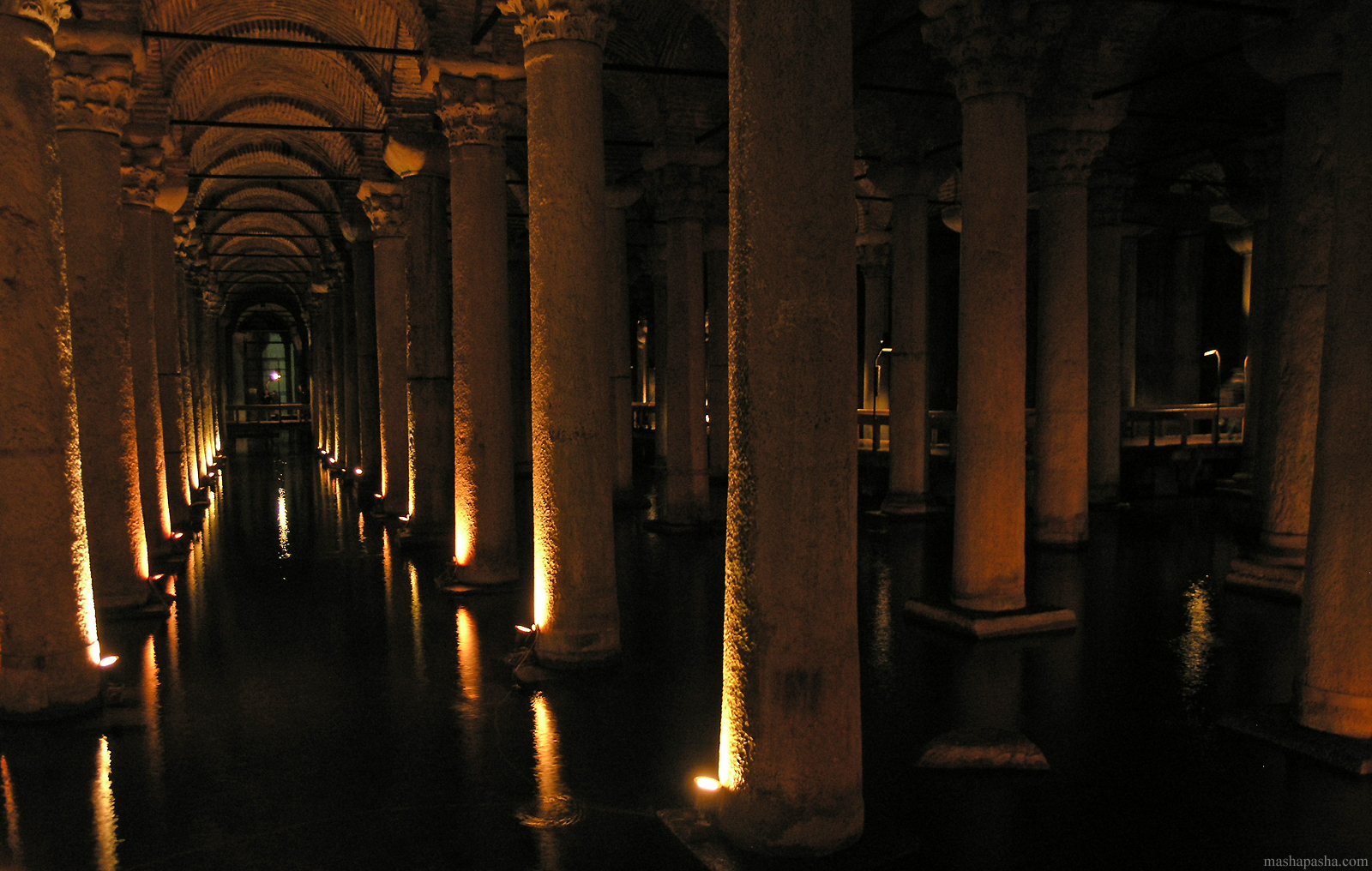
The Basilica Cistern – is the largest of several similar ancient underground reservoirs in Istanbul, offering a unique glimpse into the city’s Roman engineering heritage. The Basilica Cistern is located in the historical Sultanahmet district, right next to Hagia Sophia. The entrance is slightly inconspicuous at 13 Yerebatan Cad., and you may notice a line of tourists waiting to enter. A zero-mile marker nearby serves as a local landmark. Descending 10–12 meters underground, visitors find a vast hall supported by 336 columns, with the floor partially covered by water.
History
- Built in 532 under Emperor Justinian I beneath the Stoa Basilica, a great public square that gave the cistern its name.
- Functioned as a strategic freshwater reservoir, holding about 80,000 cubic meters of water.
- Columns, about 9 meters high, were brought from various sites. Two column bases feature Medusa heads, one upside down and one sideways, a mysterious element popular with tourists.
Features
- The floor and walls were treated with a waterproof solution to retain water delivered via aqueducts from the Belgrade Forest.
- It fell out of use after the Ottoman conquest and was rediscovered in 1545 by the French scholar Petrus Gyllius. After cleaning and restoration it opened to visitors in 1987, and after another restoration it reopened in 2022 with new lighting and art installations.
- Tourists can walk on specially laid wooden platforms between columns; low lighting creates a dramatic atmosphere but makes photography challenging.
Visiting Information
- Open daily 09:00–18:30; a separate evening session with its own ticket runs 19:30–22:00.
- Entrance fee (2026): about 1950 TL for foreign visitors in the daytime and about 3000 TL for the evening session; the Museum Pass Istanbul is not valid.


Weather in location: Cistern Basilica, Istanbul
15°
Overcast, feels 11°
- Today 13°…17°
- Wind 32 km/h N
- No precipitation now
Fri
12°…14°
☔ 43%
Sat
12°…14°
☔ 83%
Sun
11°…17°
☔ 40%
Average by month
Jan
4°…9°
18 days
13 days
Feb
5°…11°
18 days
11 days
Mar
5°…12°
20 days
11 days
Apr
9°…17°
21 days
9 days
May
13°…21°
22 days
8 days
Jun
18°…26°
22 days
8 days
Jul
21°…29°
26 days
5 days
Aug
22°…29°
28 days
3 days
Sep
18°…26°
22 days
8 days
Oct
14°…20°
24 days
7 days
Nov
10°…16°
21 days
9 days
Dec
6°…11°
18 days
12 days
Monthly averages and dry days (no measurable rain) from ERA5, last 10 years.