





27/01/2024
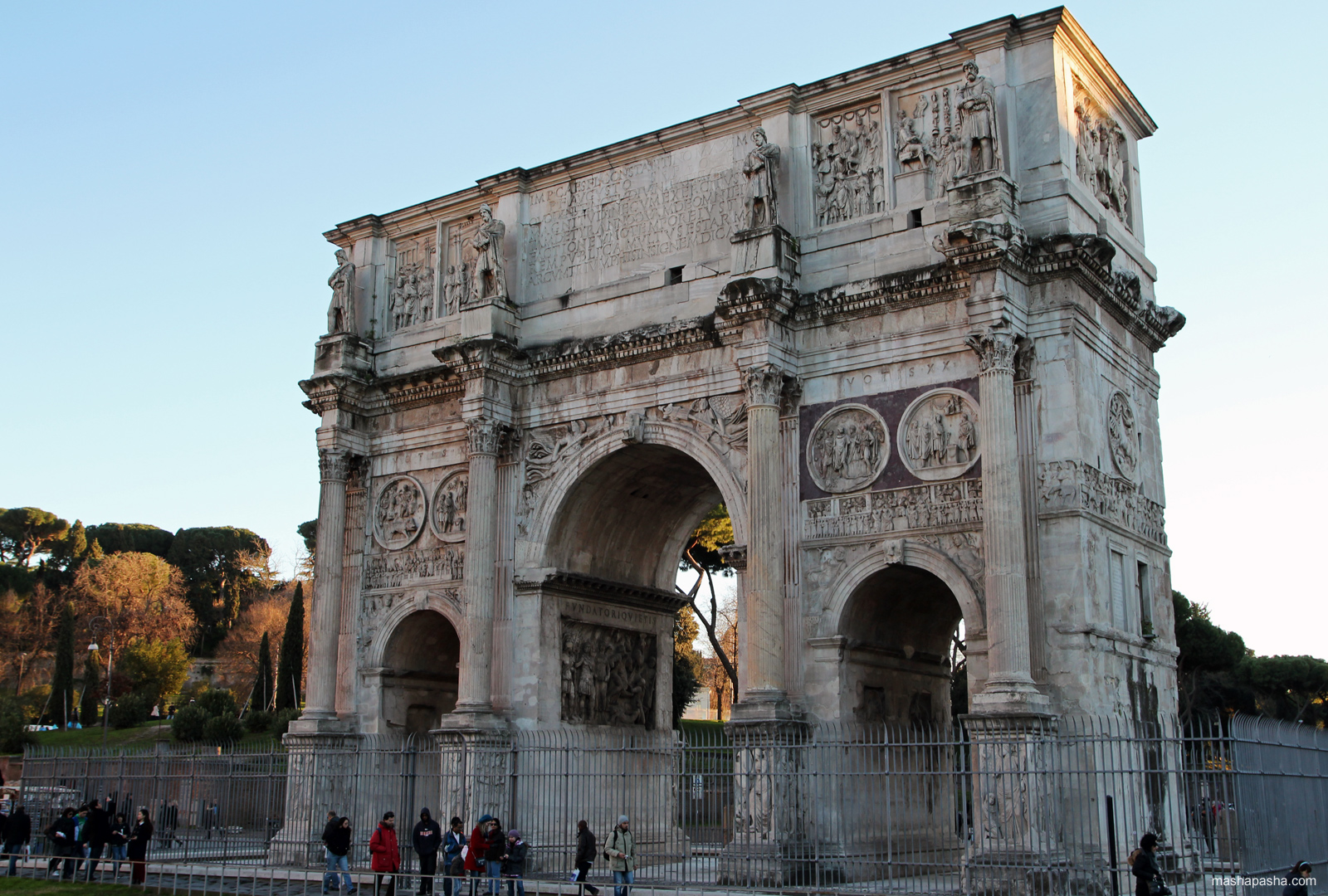
Arch of Constantine (Latin: Arcus Constantini) is a triumphal arch in Rome, dedicated by the Roman Senate in 315 AD to Emperor Constantine I for the tenth anniversary of his reign and his victory over Maxentius at the Battle of the Milvian Bridge on 28 October 312. Unlike earlier triumphal arches, which celebrated victories over foreign enemies, it honors a victory in a civil war; its inscription says that Constantine won “by divine inspiration” (instinctu divinitatis).
The arch stands between the Colosseum and the Palatine Hill, on the route once taken by triumphal processions. It is 21 meters high, 25.9 meters wide and 7.4 meters deep, the largest surviving Roman triumphal arch. Much of its sculpture was taken from earlier monuments of Trajan, Hadrian and Marcus Aurelius, and the emperors’ heads were recarved with the features of Constantine; only the narrow frieze above the side passages, showing his campaign against Maxentius, was made for the arch itself. This mix of 2nd- and 4th-century work makes the arch a textbook example of how Roman art changed in late antiquity.
The Arch of Constantine has three passageways: a large central arch flanked by two smaller ones. It is fenced off, so you cannot walk through it, but it can be seen for free at any time from Piazza del Colosseo, a few steps from the Colosseo metro station (line B). In 1960 the Olympic marathon finished here, won by the barefoot runner Abebe Bikila.
Key points:
- Dedicated: 315 AD by the Roman Senate, for Constantine’s victory at the Milvian Bridge (312).
- Location: Between the Colosseum and the Palatine Hill, Rome.
- Size: 21 m high, 25.9 m wide, 7.4 m deep.
- Decoration: Reliefs and statues reused from monuments of Trajan, Hadrian and Marcus Aurelius, plus a Constantinian frieze.
- Visit: Free, viewable from outside at any time; the arch itself is fenced off.
- UNESCO World Heritage Site as part of the Historic Centre of Rome (since 1980).


Weather in location: Arch of Constantine, Rome
- Today 17°…23°
- Wind 4 km/h S
- No precipitation now
Forecast data: Open-Meteo.com
Average by month
Monthly averages and dry days (no measurable rain) from ERA5, last 10 years.