







16/03/2026
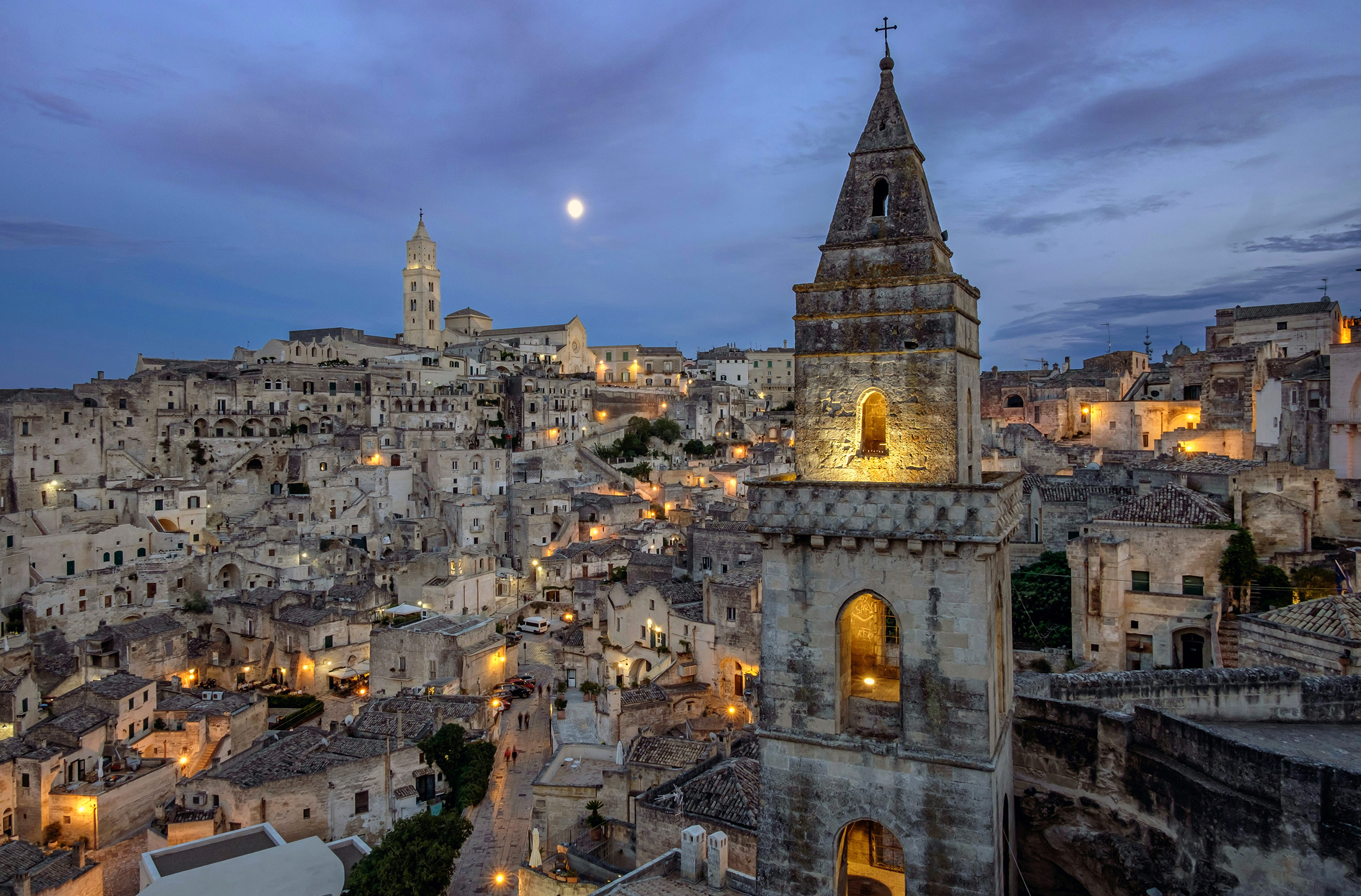
Matera is a historic city located in the Basilicata in southern Italy, about 65 km southwest of Bari and roughly 200 km east of Naples. The city stands on the edge of a deep limestone ravine called the Gravina di Matera, where houses, churches, and streets were carved directly into the rock. Matera is one of the oldest continuously inhabited settlements in Europe, with evidence of human habitation dating back to the Paleolithic period. Its historic districts known as the Sassi di Matera were inscribed on the UNESCO World Heritage List in 1993 due to their unique cave architecture and cultural significance.
The city is best known for its extraordinary landscape of stone dwellings carved into the cliffs. The Sassi districts consist of two main areas, Sasso Caveoso and Sasso Barisano, where homes, chapels, and entire streets were built into natural caves and expanded over centuries. Many of these cave houses were inhabited until the 1950s and today have been restored as museums, hotels, and restaurants. Because of its ancient appearance, Matera has been used as a filming location for historical movies such as “The Passion of the Christ” and “No Time to Die”.
Visitors exploring Matera can see numerous historical landmarks. One of the most important is the Matera Cathedral, built in the 13th century on the highest point between the two Sassi districts. The city is also famous for its rock-hewn churches, many of which contain medieval frescoes. Notable examples include Santa Maria de Idris and San Pietro Caveoso. Walking through the narrow stone streets and stairways offers panoramic viewpoints of the canyon and the cave houses layered along the slopes.
Matera can be reached from several major cities in southern Italy. The nearest international airport is Bari, about 1 hour away by car; direct buses run from the airport to Matera several times a day and take about 1 hour 15 minutes. From Bari Centrale, the regional trains of Ferrovie Appulo Lucane reach Matera Centrale in about 1.5 to 2 hours, often with a change in Altamura; on Sundays and public holidays buses usually replace the trains. Travelers coming from Rome or Naples usually take a train to Bari first or a direct long-distance bus to Matera.
The historic center of Matera is largely pedestrian and best explored on foot. Many of the cave dwellings have been transformed into museums, boutique hotels, and cultural spaces where visitors can learn about the traditional way of life in the Sassi. The Casa Grotta di Vico Solitario museum (open daily, full ticket €8) shows how families once lived inside a cave home together with their animals, while the Belvedere di Murgia Timone across the ravine offers the classic view of the ancient settlement carved into the cliffs.
Today Matera is one of the most remarkable cultural destinations in southern Italy. In 2019 the city was named the European Capital of Culture, which helped restore many historic buildings and improve tourist infrastructure.


Weather in location: Cave city of Matera, Italy
- Today 12°…20°
- Wind 2 km/h E
- No precipitation now
Average by month
Monthly averages and dry days (no measurable rain) from ERA5, last 10 years.
























