





01/03/2024
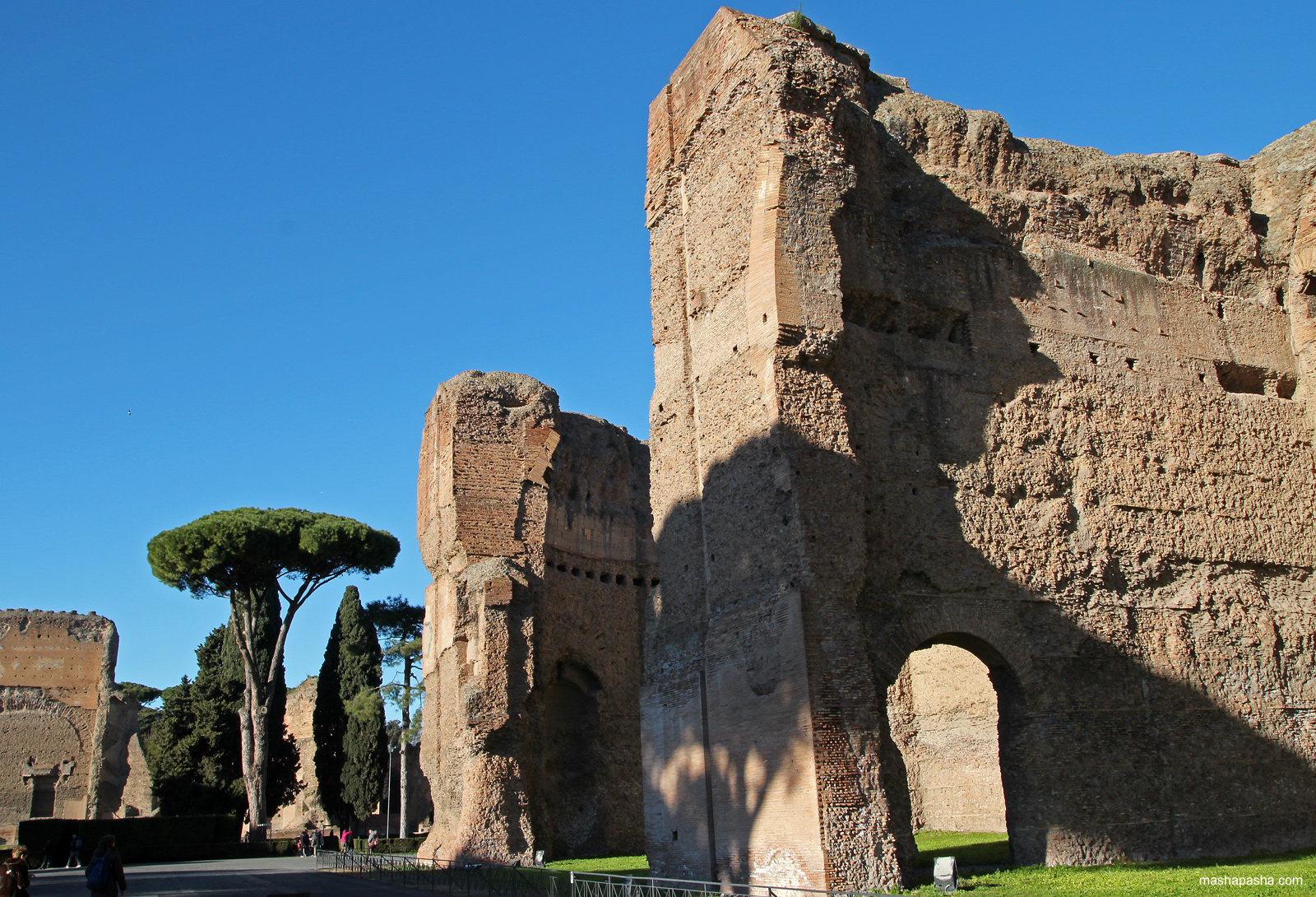
The Baths of Caracalla (Italian: Terme di Caracalla) are the ruins of one of the largest public baths of ancient Rome, built between about 212 and 216 AD under Emperor Caracalla. The central bath building alone measured 214 × 110 meters and rose to some 44 meters, and the whole walled precinct, with gardens, sports grounds and libraries, covered about 412 × 393 meters. Up to 1,600 people could bathe at the same time, with water brought by a dedicated aqueduct, the Aqua Antoniniana. The baths worked for three centuries, until the Goths cut Rome’s aqueducts during their siege of the city in 537.
The marble facing and most of the decoration are gone, but the brick walls still stand to a great height, and you can walk through the caldarium (hot bath), the tepidarium, the frigidarium (cold bath), the natatio (open-air pool) and the two palaestrae (gyms), where fragments of mosaic floors survive. Beneath the baths run about 2 km of service tunnels that held the furnaces and wood stores, along with one of the largest Mithraea in Rome. Famous statues found here, such as the Farnese Bull and the Farnese Hercules, are now in the National Archaeological Museum of Naples.
In summer the Rome Opera stages open-air performances in front of the caldarium, a tradition that goes back to 1937. The baths are part of the UNESCO World Heritage Site of the Historic Centre of Rome and lie about 15 minutes’ walk south of the Colosseum.
Key points:
- Built: about 212–216 AD, under Emperor Caracalla.
- Size: main building 214 × 110 m, whole precinct about 412 × 393 m; up to 1,600 bathers at once.
- Tickets: €8, free for under-18s.
- Hours: Tuesday to Sunday from 9:00, closing between 16:30 in winter and 19:15 in summer, last entry about an hour earlier; closed on Mondays.
- Getting there: metro line B to Circo Massimo, then about 10 minutes on foot.


Weather in location: Baths of Caracalla, Rome, Italy
- Today 17°…23°
- Wind 4 km/h S
- No precipitation now
Forecast data: Open-Meteo.com
Average by month
Monthly averages and dry days (no measurable rain) from ERA5, last 10 years.