25/08/2026
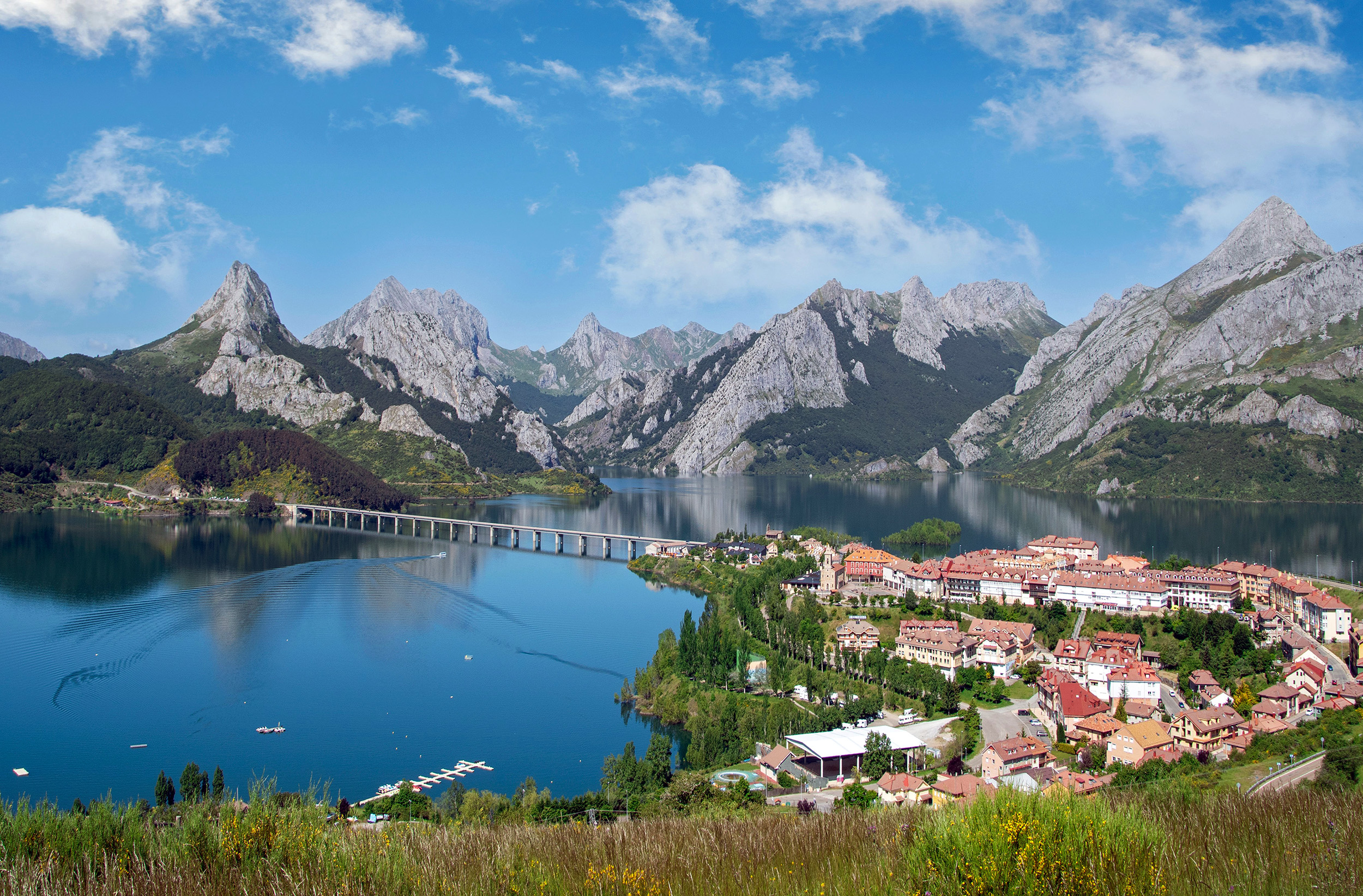
The Picos de Europa are the most spectacular mountains in northern Spain — a compact but dramatic range of jagged limestone peaks rising steeply just a few kilometres inland from the Cantabrian coast, split into three great massifs by plunging river gorges. The heart of the range is protected as the Picos de Europa National Park, which spans the regions of Asturias, Cantabria and Castile and León and, in its original form around Covadonga, was Spain’s very first national park, created in 1918. Within a small area the landscape leaps from green valleys and beech woods to bare grey summits approaching 2,650 metres, giving the Picos a grandeur out of all proportion to their size and making them one of the finest walking and climbing destinations in the country.
What to See
The most famous route is the Cares Gorge (Garganta del Cares), the “Divine Gorge,” a breathtaking footpath cut into sheer cliffs high above the Cares river between the villages of Poncebos and Caín — one of the great walks of Spain. On the western side, the Lakes of Covadonga (Enol and La Ercina) sit in a glacial bowl above the famous Sanctuary of Covadonga, cradle of the Christian Reconquista, while on the Cantabrian side the Fuente Dé cable car whisks visitors up almost 800 metres in minutes to a high viewpoint over the Central Massif. Beyond these highlights lies a wilderness of peaks, high pastures and mountain refuges, home to chamois, griffon vultures and, in the wider range, still a few brown bears and wolves. Traditional stone villages such as Potes, Arenas de Cabrales — famous for its blue cheese — and Cangas de Onís make characterful bases.
How to Get There and Practical Information
The Picos de Europa rise inland from the north coast of Spain, roughly between the cities of Oviedo, Santander and León. There is no single entrance: the park is reached through three main gateways — Cangas de Onís on the Asturian side (for Covadonga and its lakes), Potes in Cantabria (for the Fuente Dé cable car) and Posada de Valdéon in León (for the upper Cares) — each an hour or two by road from the nearest cities and airports. A car is by far the most practical way to explore, though seasonal buses and a shuttle to the Covadonga lakes help in summer, when the narrow mountain roads can be busy. The park itself is free to enter and open year-round, but the high country is serious mountain terrain, so proper footwear, layers and an eye on the fast-changing weather are essential; late spring to early autumn is the best time to visit.


Weather in location: Picos de Europa, Spain
- Today 7°…13°
- Wind 13 km/h SW
- No precipitation now
Average by month
Monthly averages and dry days (no measurable rain) from ERA5, last 10 years.